Diving Jardines de la Reina
If there is one place in the Caribbean that, in my experience, comes closest to showing a coral reef ecosystem with very little direct human impact, it is Jardines de la Reina—the Gardens of the Queen.
Jardines de la Reina is an uninhabited archipelago of numerous small islands and cays off the southern coast of Cuba. The archipelago extends for roughly 150 km parallel to the coast, with the outer islands about 70 km offshore. The remote location, limited access, and long-standing protection have helped preserve an unusually intact marine environment.
The area has been protected as a national park for decades, and access is strictly controlled. During my visits, diving was organized by the Avalon Fleet, which had the exclusive permit for recreational diving in the area. The operation was based on comfortable liveaboards equipped specifically for diving, and the organization and service were excellent by international standards. Visitor numbers are deliberately limited, which is an important part of keeping the impact of tourism low.
The difference becomes apparent even before entering the water. The islands are covered by extensive mangrove forests, providing habitat for iguanas, hutias, and American crocodiles. Some beaches are so remote that the only footprints are those of the occasional visitor—and the tracks left by crocodiles.
The American crocodiles can become very large, exceeding 4 metres, but they are generally not aggressive towards humans. One of the most remarkable experiences during my visits was snorkelling with crocodiles in the shallow waters around the islands. It is certainly not an activity I had expected to encounter on a Caribbean diving trip, and it remains one of my most memorable wildlife experiences.
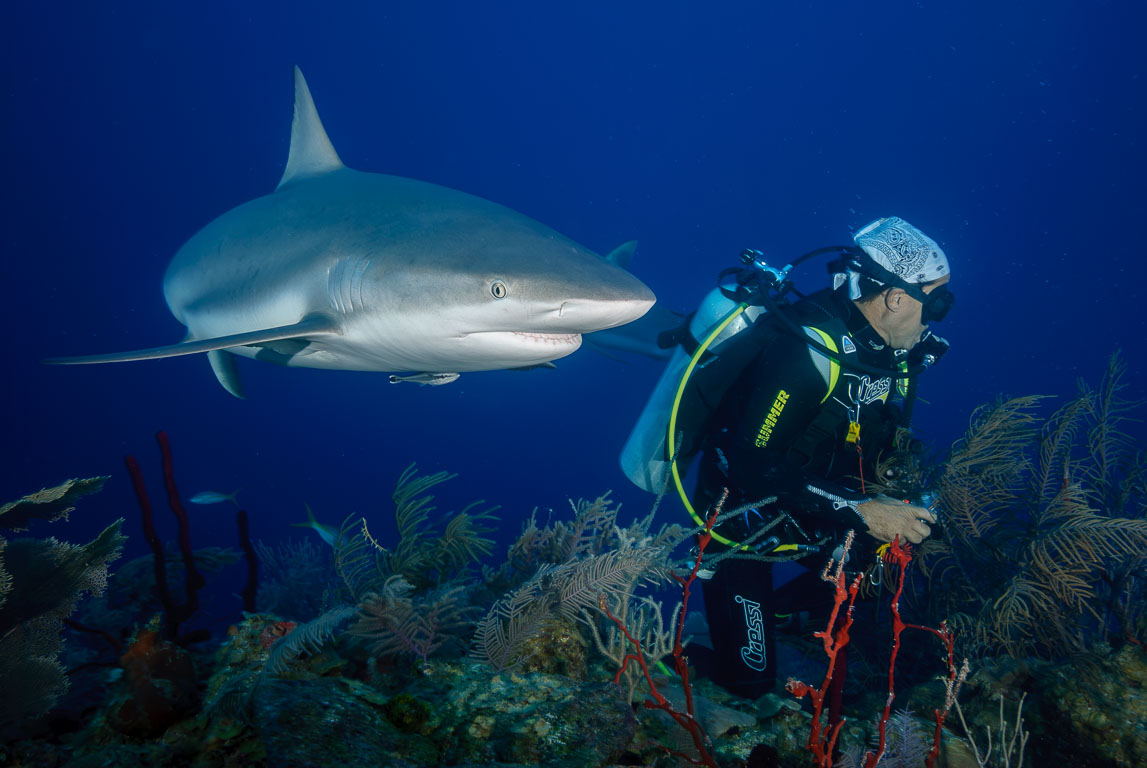
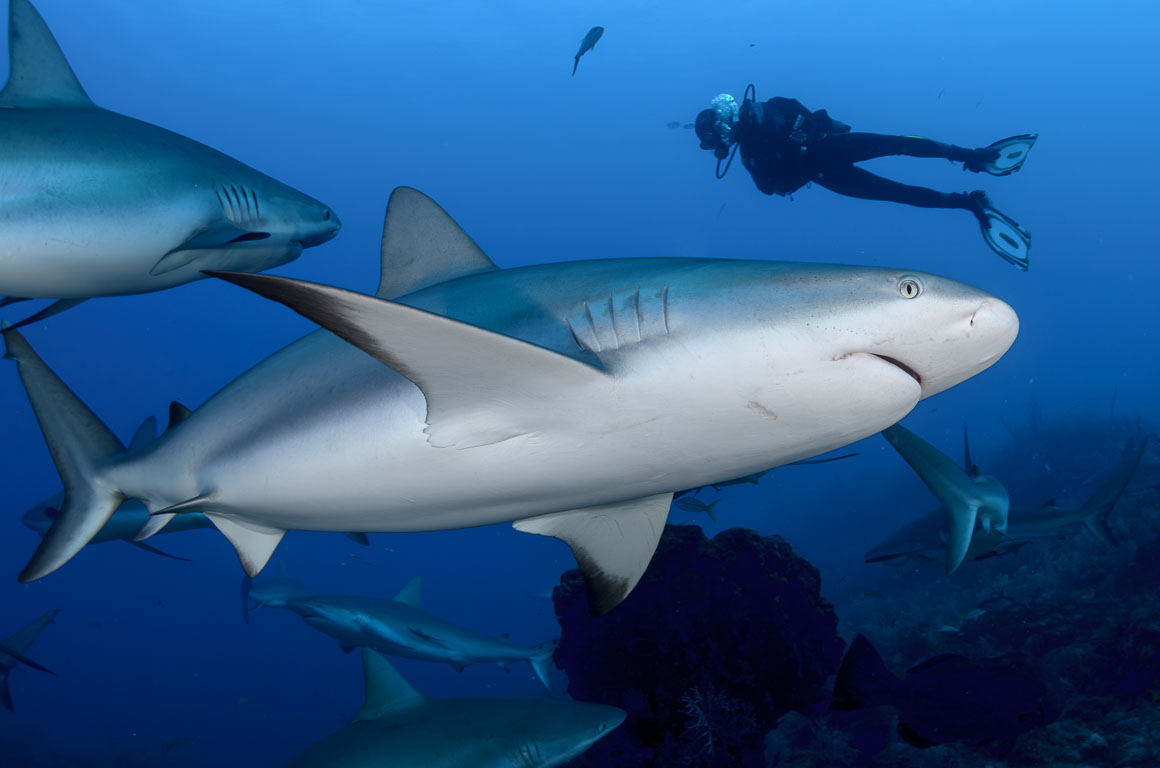
Underwater, Jardines de la Reina is even more impressive. The reefs include coral gardens, canyons, walls, and extensive mangrove habitats, with remarkably abundant marine life. Large predators are a regular part of the dives. I encountered Caribbean reef sharks, nurse sharks, and silky sharks on many dives, often spending considerable time swimming around the reef with them.
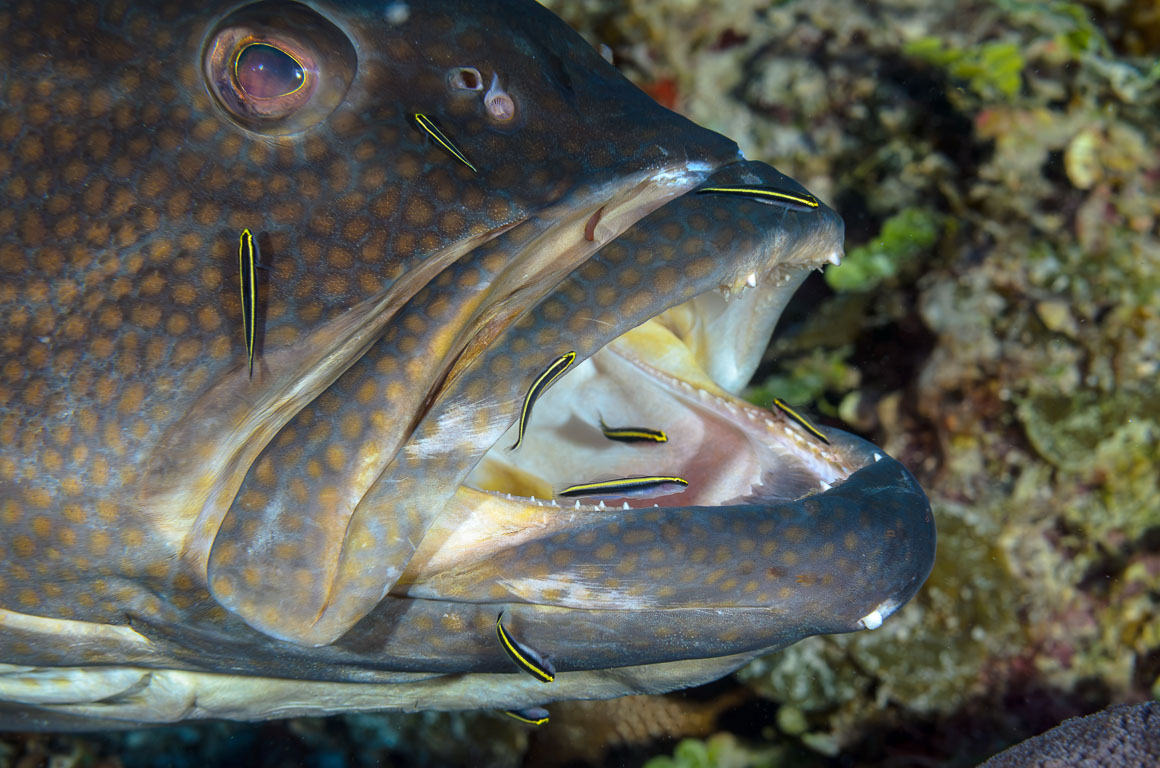
Large groupers are another characteristic feature of the area. Goliath groupers can be enormous, while large adult black grouper and Nassau grouper are encountered much more regularly than at many other Cuban dive sites I have visited. Schools of reef fish, barracudas, turtles, and numerous smaller reef species add to the diversity.
What makes Jardines particularly interesting is not simply the number of individual animals, but the presence of large predators and large adult reef fish within the same ecosystem. Compared with more heavily exploited reefs, the difference is striking. The reefs provide an excellent example of what a Caribbean marine ecosystem can look like when fishing pressure and other direct human impacts are kept relatively low.
It is not surprising that Jardines de la Reina has attracted considerable scientific and documentary interest and has been featured by National Geographic and other international media.
For me, Jardines de la Reina was unquestionably one of the most remarkable diving areas I encountered during more than two decades of diving in Cuba. The combination of remote islands, intact mangrove habitats, exceptionally abundant large marine animals, and very clear water makes it quite different from the other Cuban dive sites described on ReefColors.