 Red
Red
 Red
Red
 Red
Red
 Red
Red
 Red
Red
 Red
Red
 Red
Red
 Red
Red
 Red
Red
 Red
Red
 Red
Red
Diving at the "Graveyard of the Atlantic"
The Outer Banks of North Carolina are among the world's premier destinations for wreck diving. Long stretches of shallow sandbanks extend far into the Atlantic, where the warm Gulf Stream meets the cold Labrador Current. The resulting fog, strong currents, shifting shoals, hurricanes, and winter storms have made these waters one of the most dangerous shipping routes in North America.
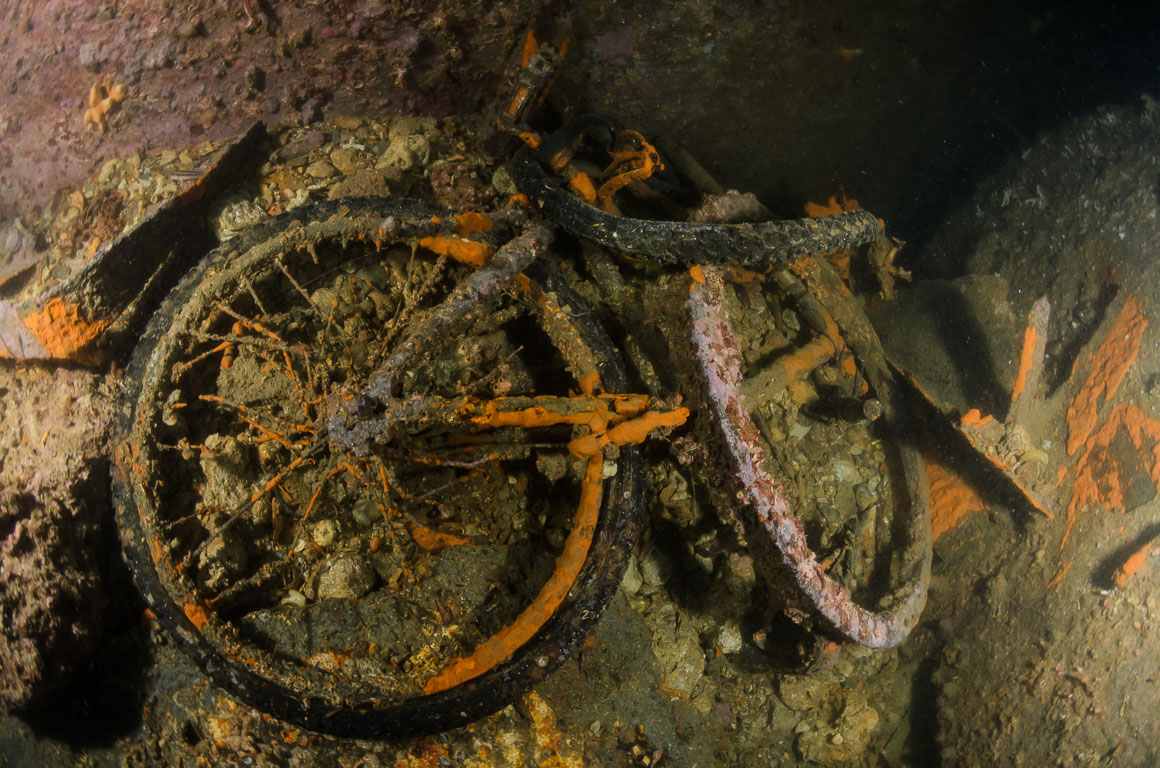
Since the arrival of European explorers in the 16th century, more than 5,000 ships are believed to have been lost along the North Carolina coast. Over 1,500 shipwrecks have been identified, giving the region its well-deserved nickname: the "Graveyard of the Atlantic".
For divers, Morehead City is the main gateway to these historic wrecks. The Olympus Dive Center offers access to many of the best dive sites, ranging from relatively shallow coastal wrecks to the famous offshore wrecks lying along the edge of the Gulf Stream.
The inshore wrecks are generally easier to reach and, because of their shallower depths, are suitable for a wider range of divers. Visibility, however, is often limited by the green, plankton-rich coastal water.
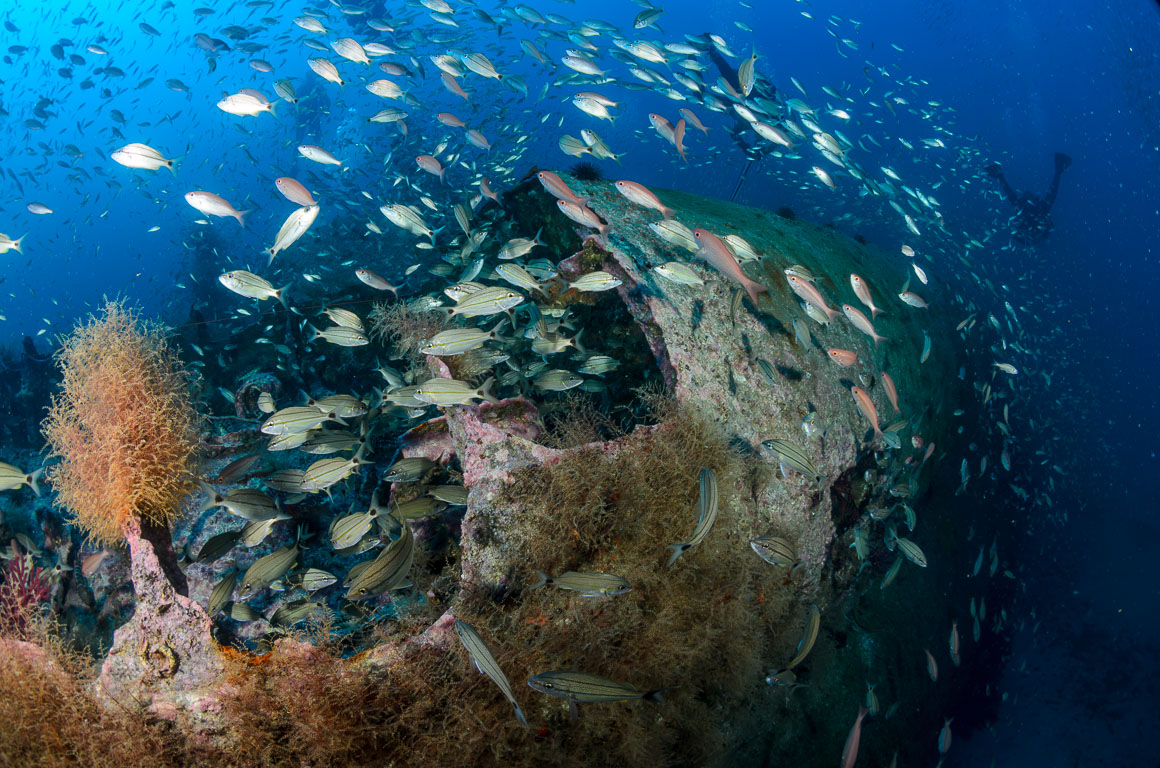
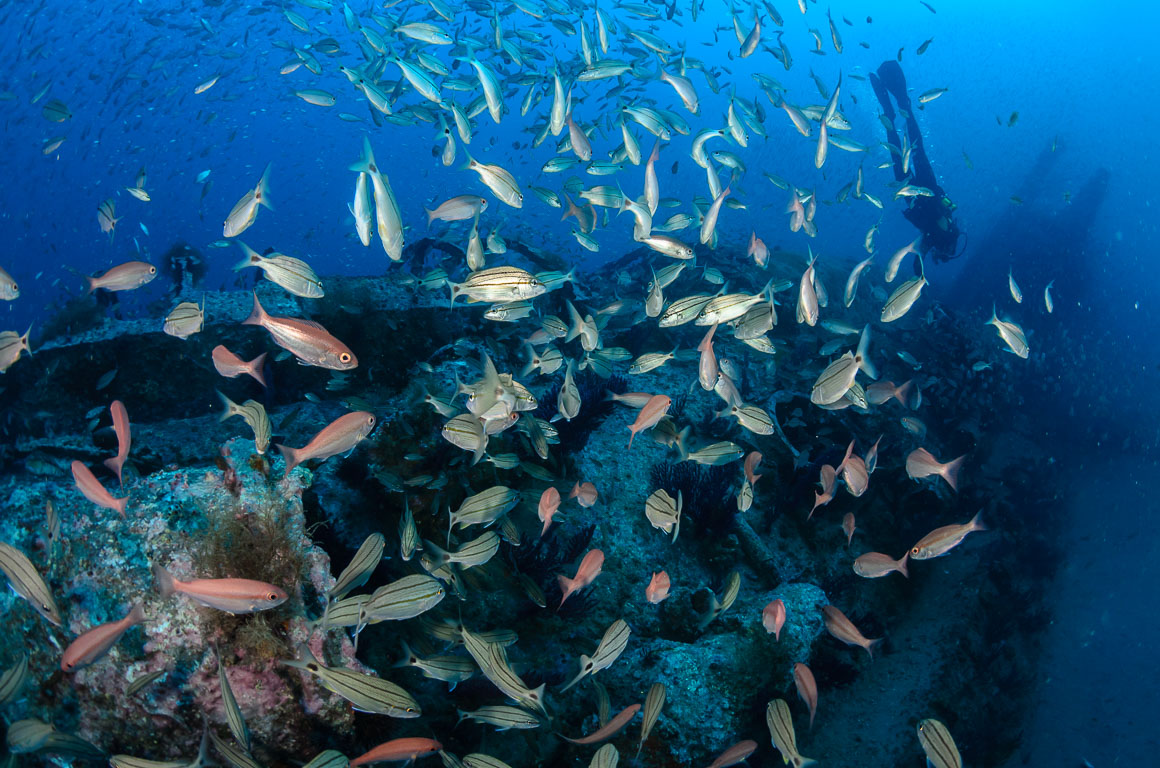
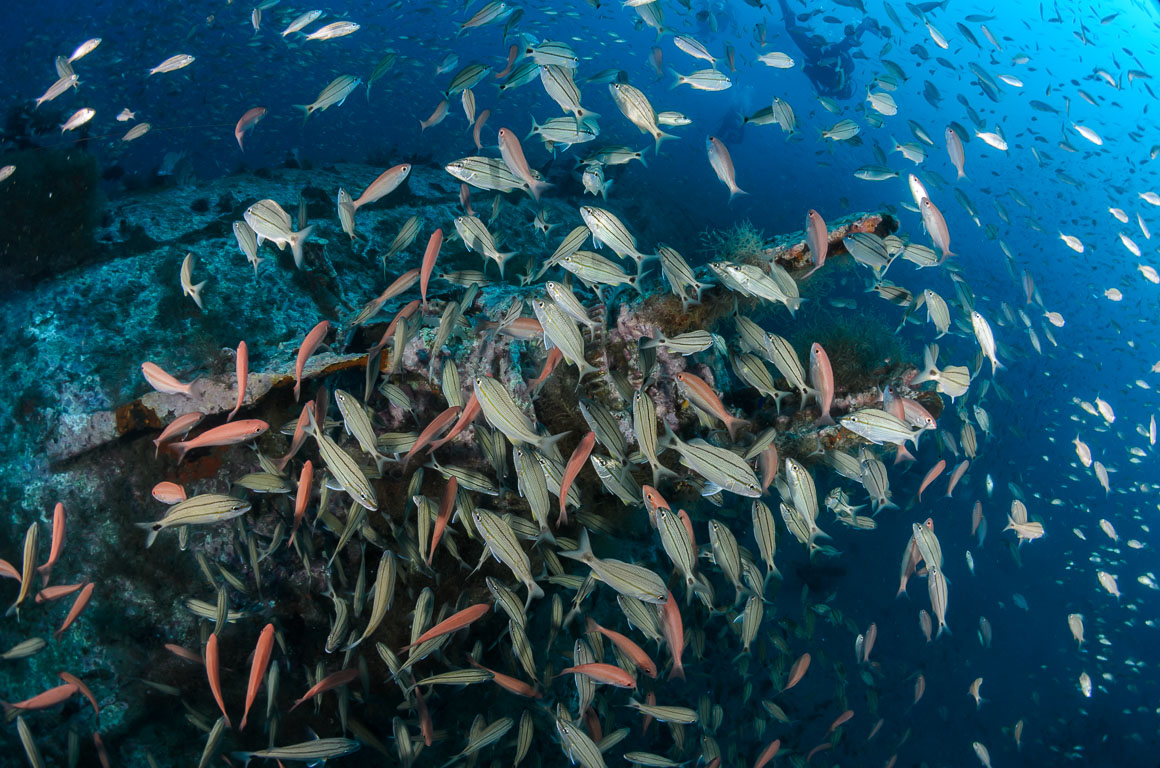
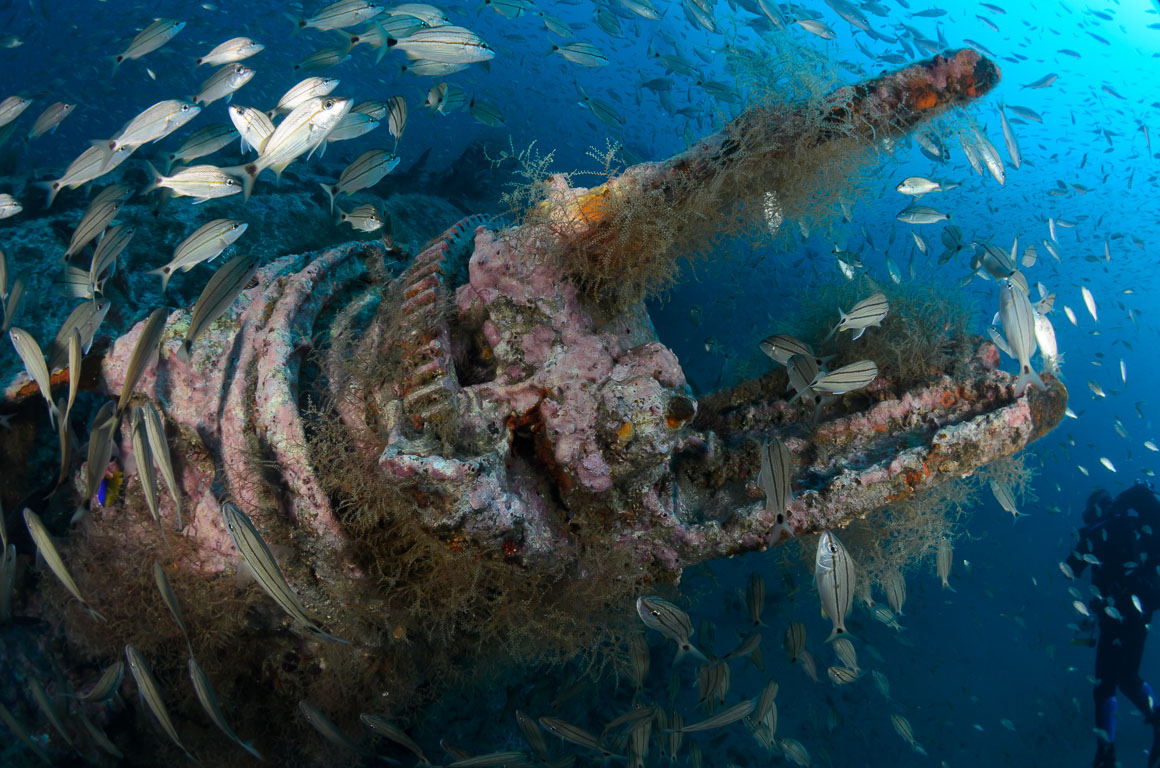
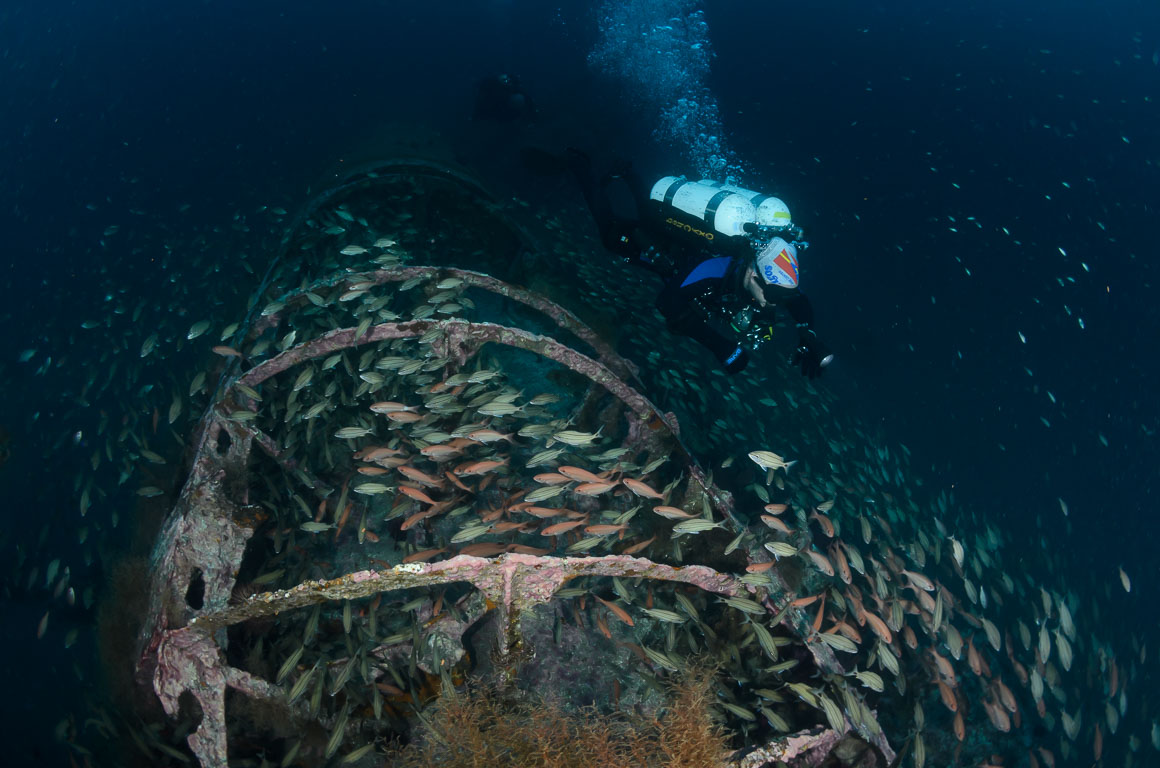
The offshore wrecks provide a completely different experience. Lying mostly at depths greater than 30 metres, they require more experience and favorable conditions. In return, divers are rewarded with the crystal-clear blue water of the Gulf Stream and some of the richest marine life in the western Atlantic.
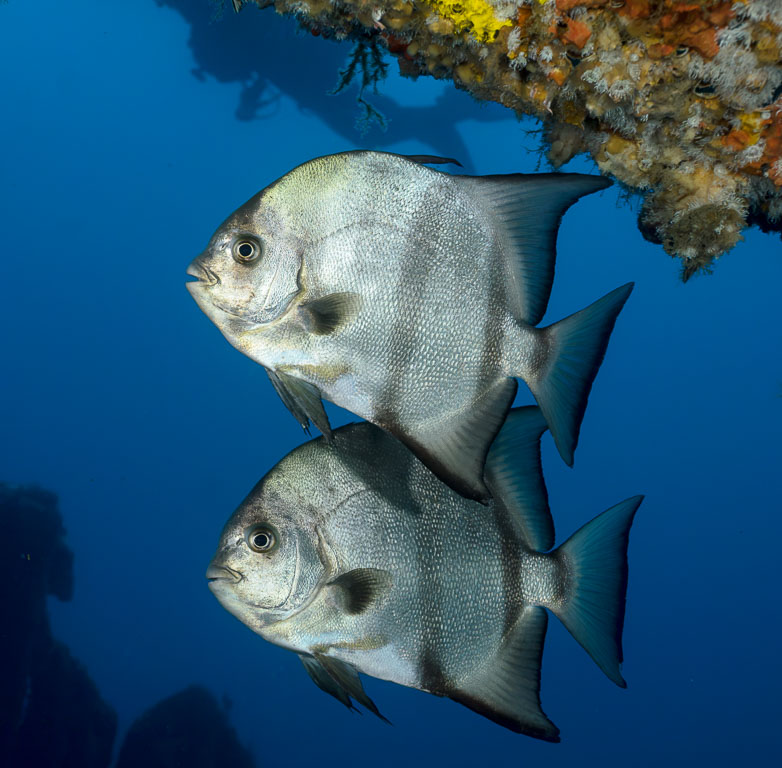
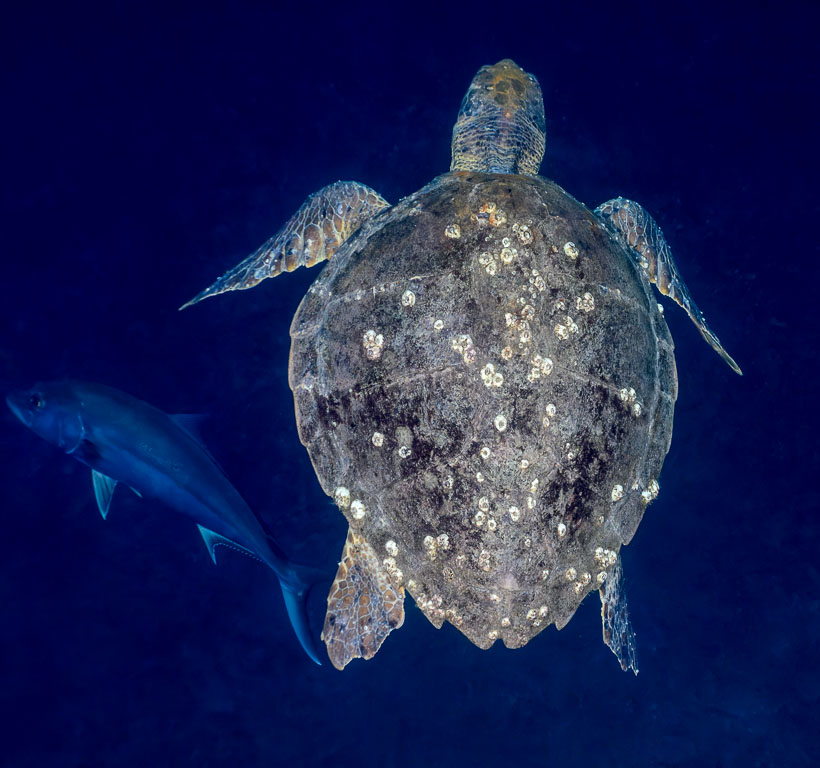
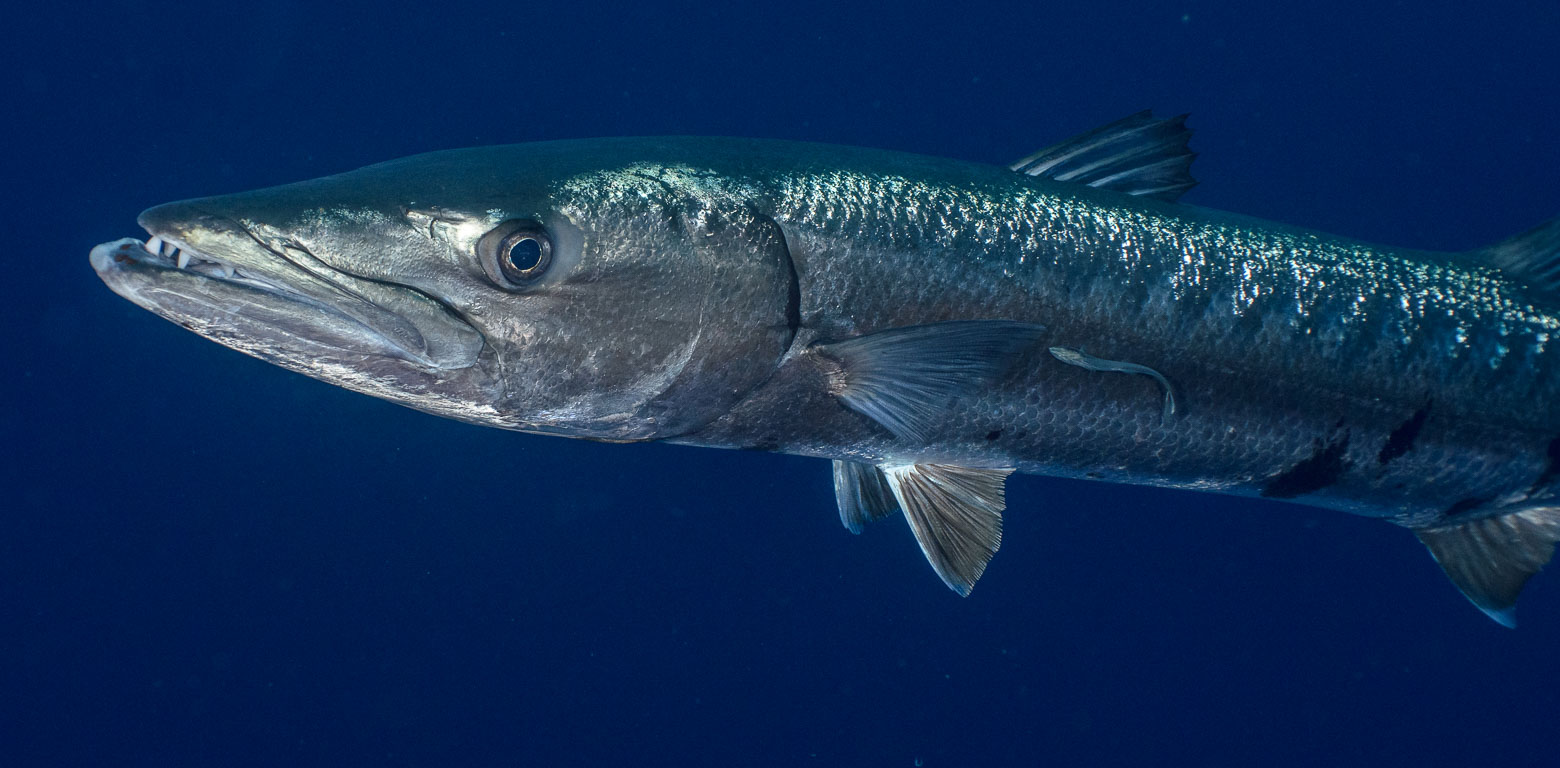
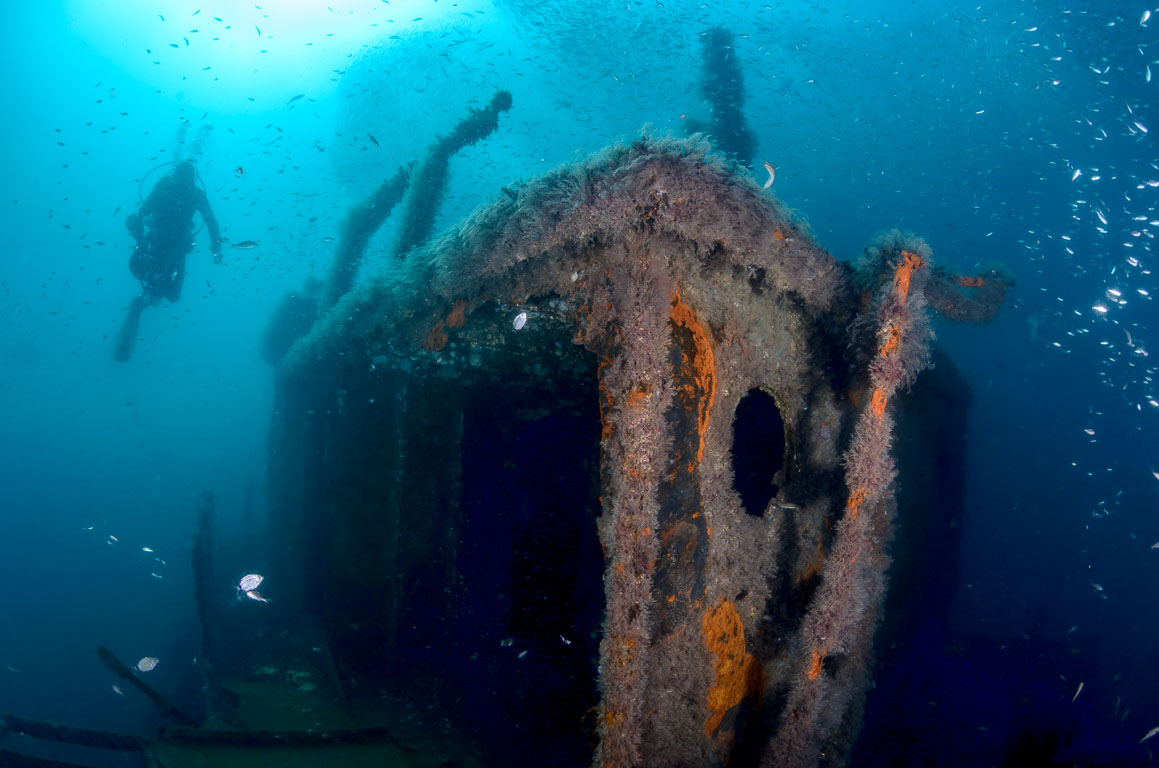
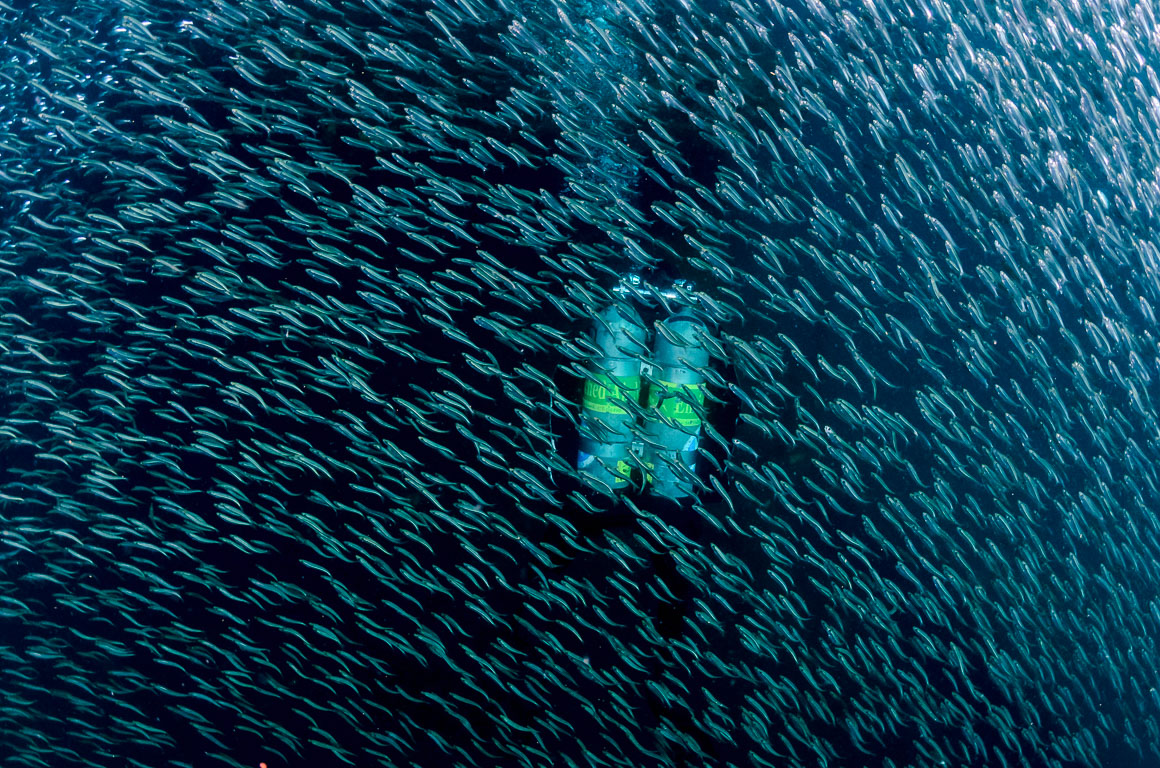
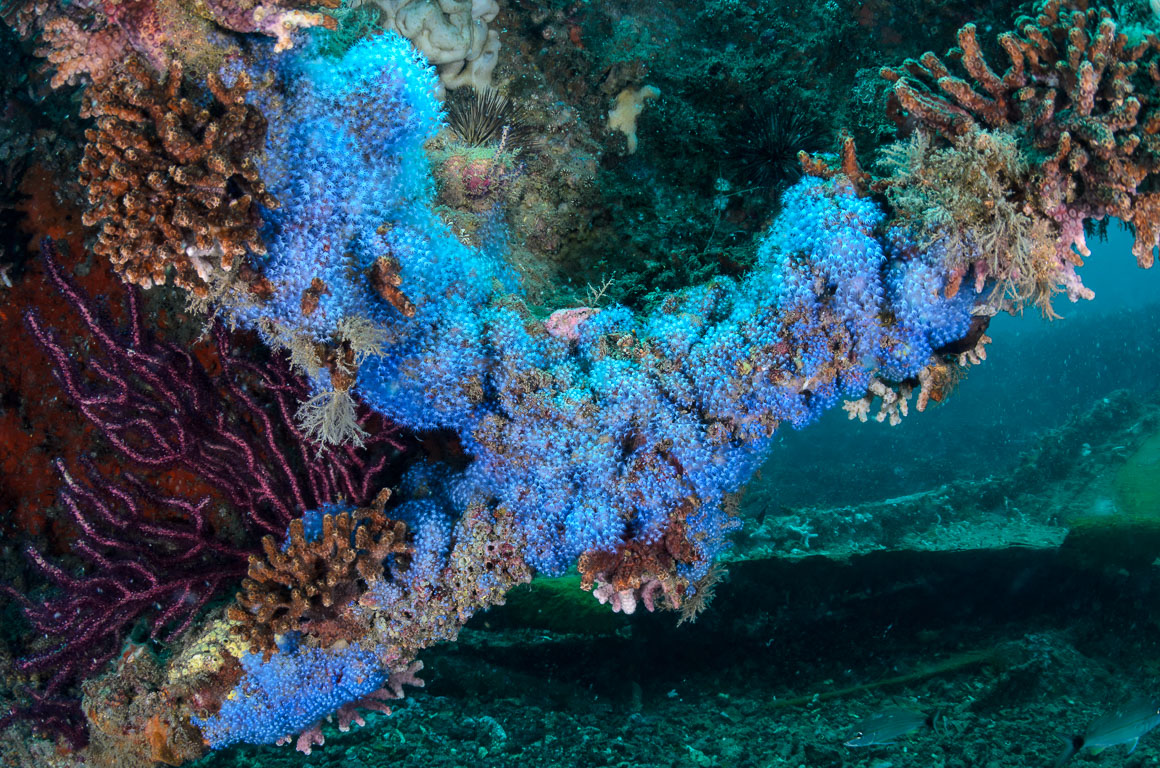
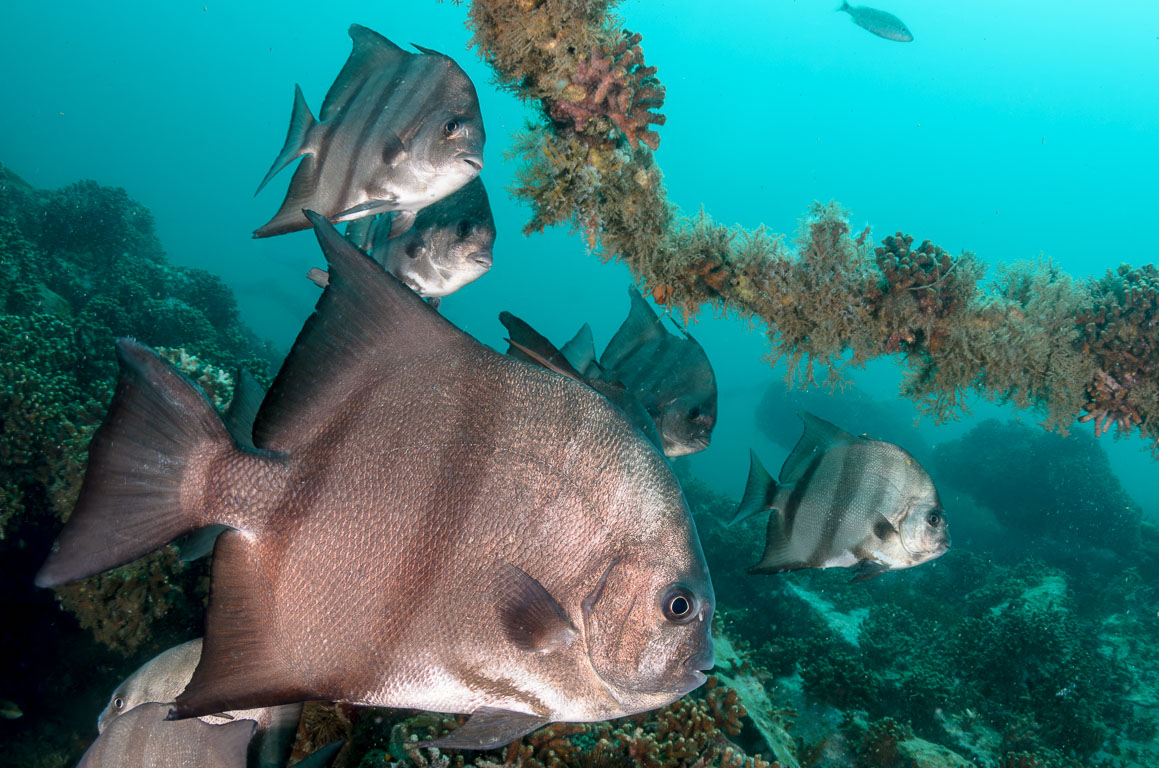
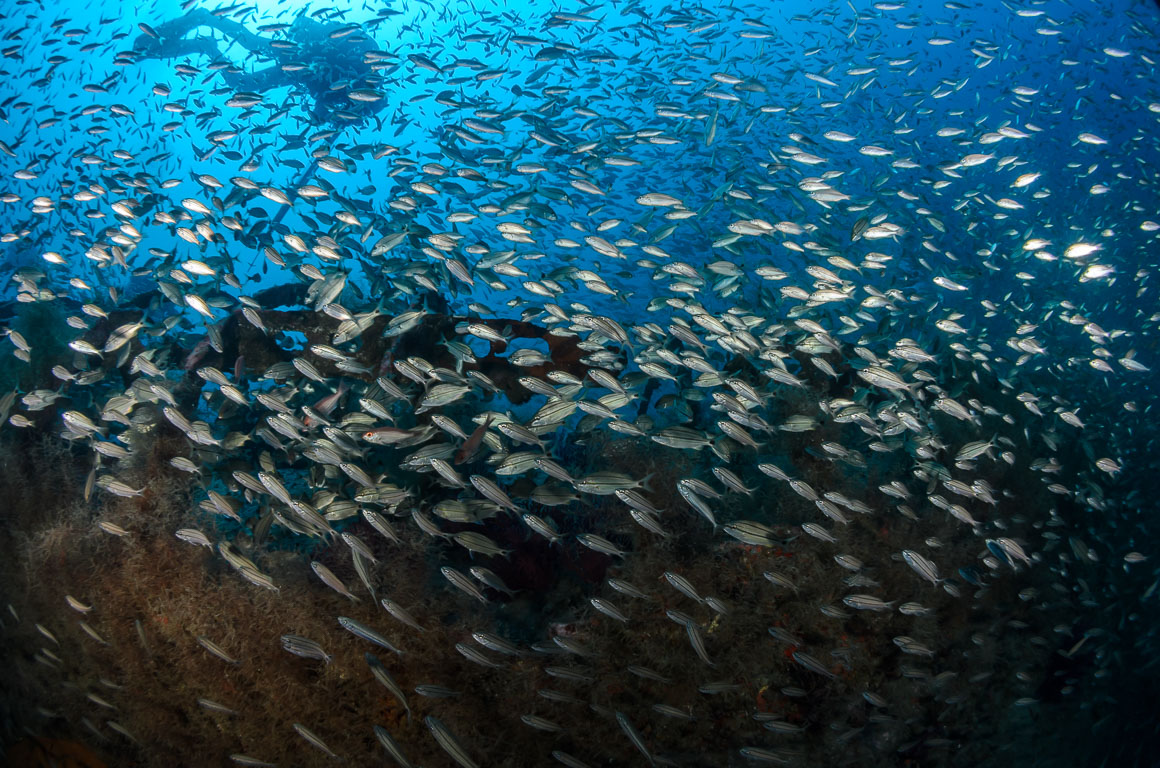
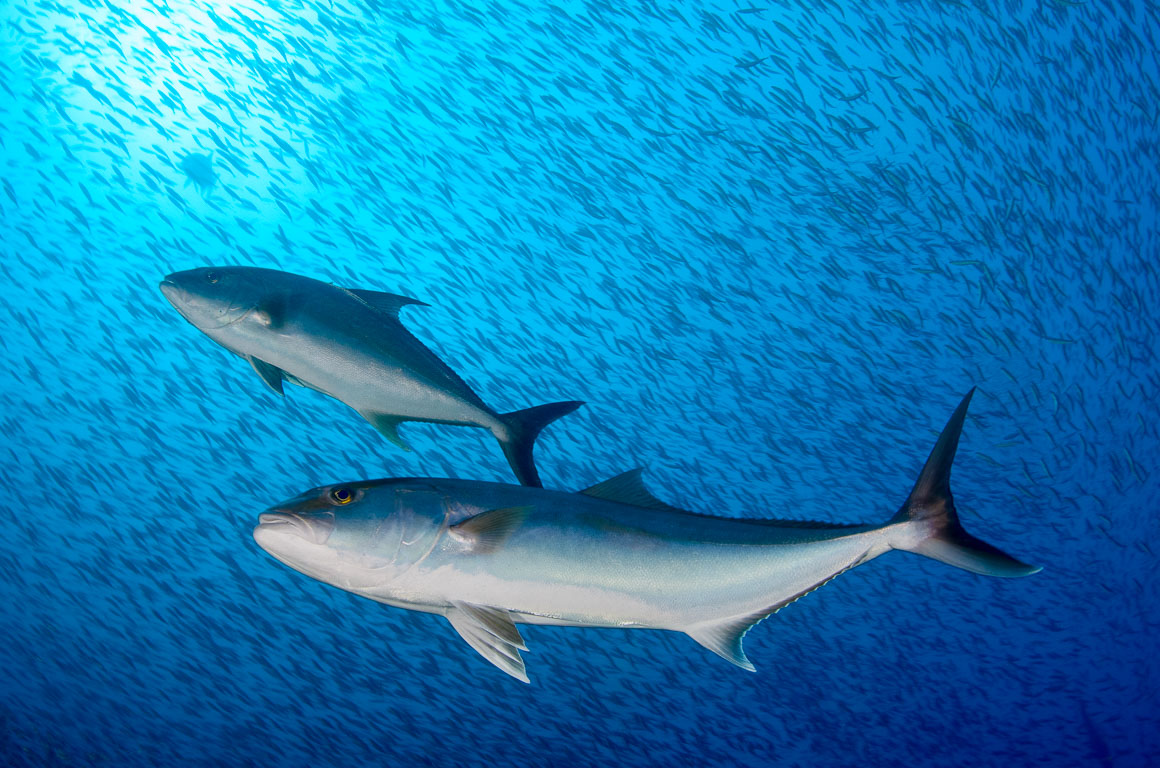
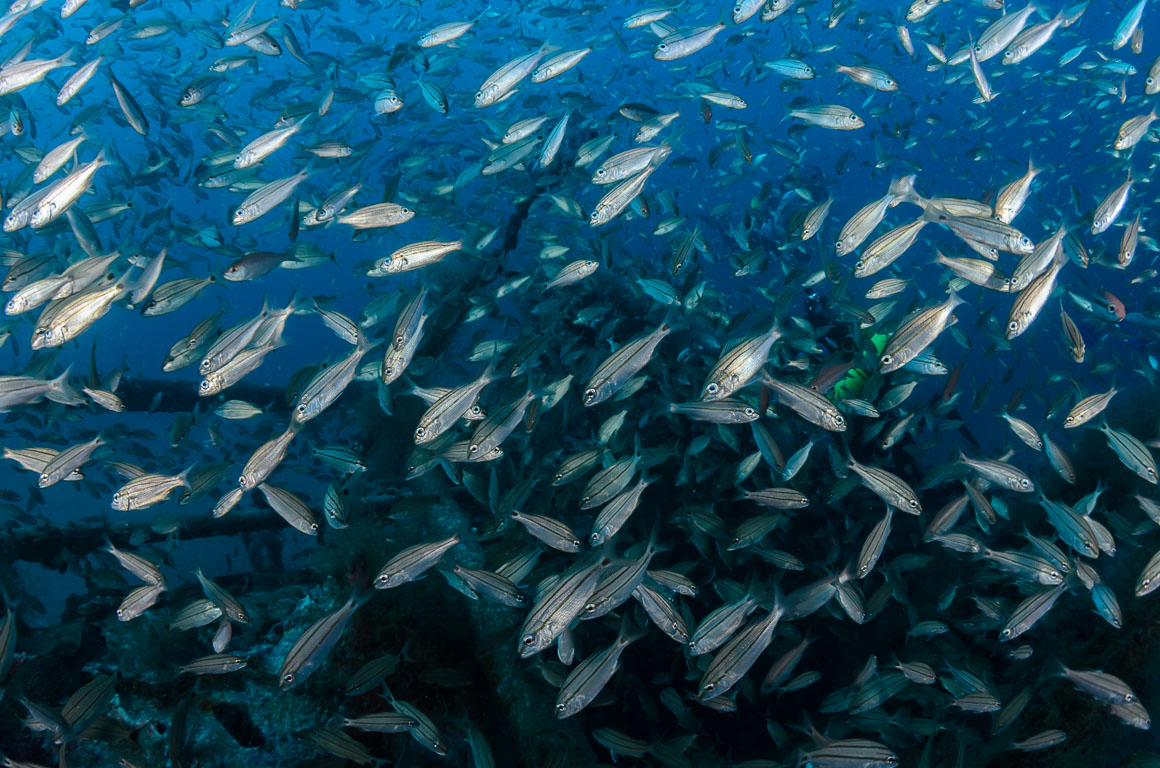
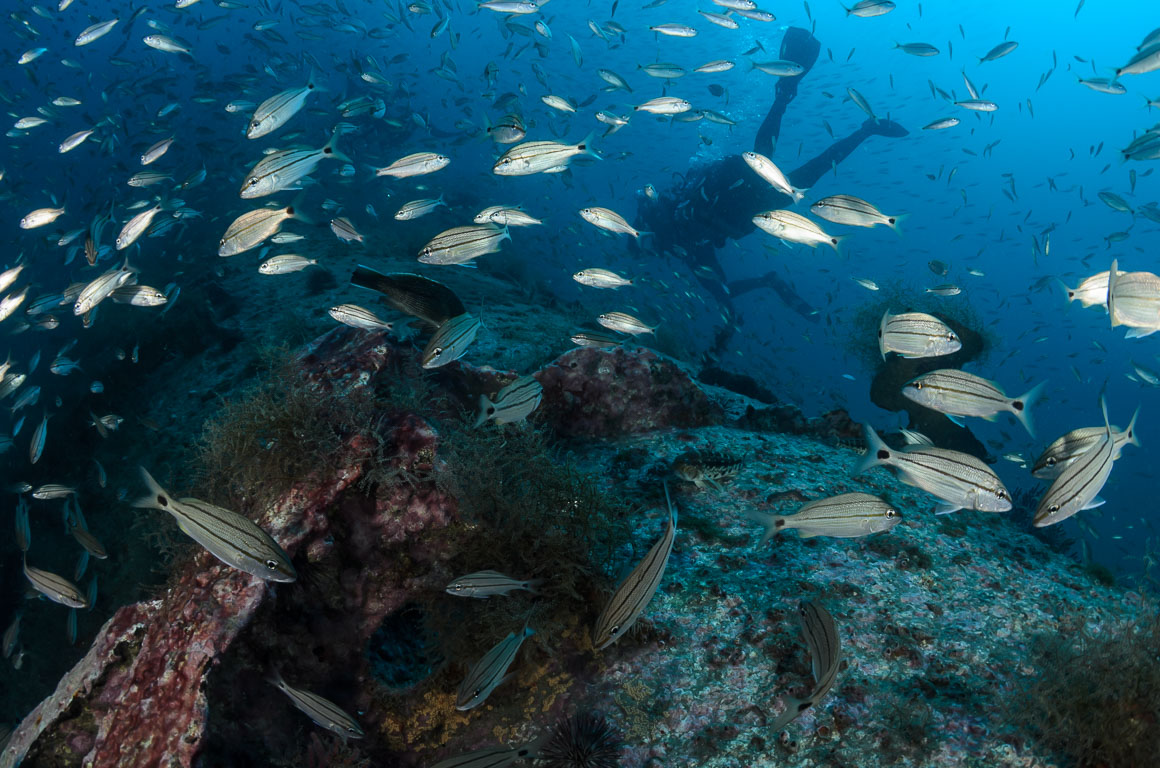
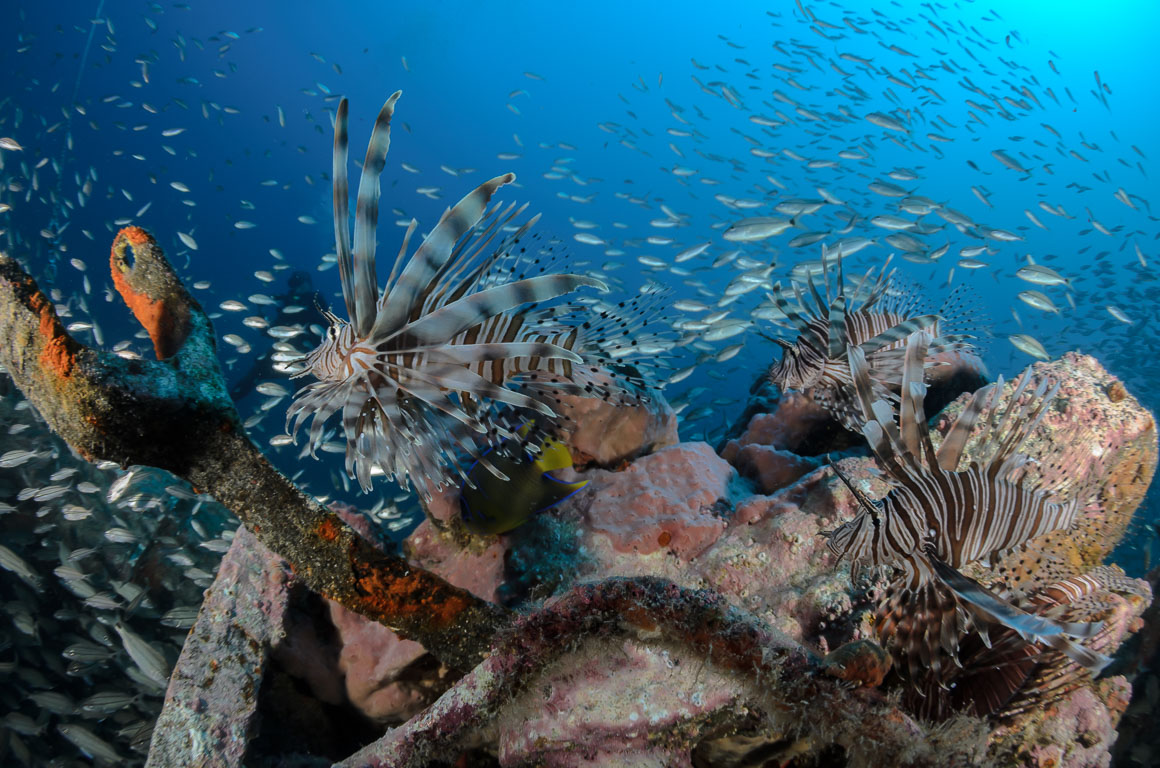
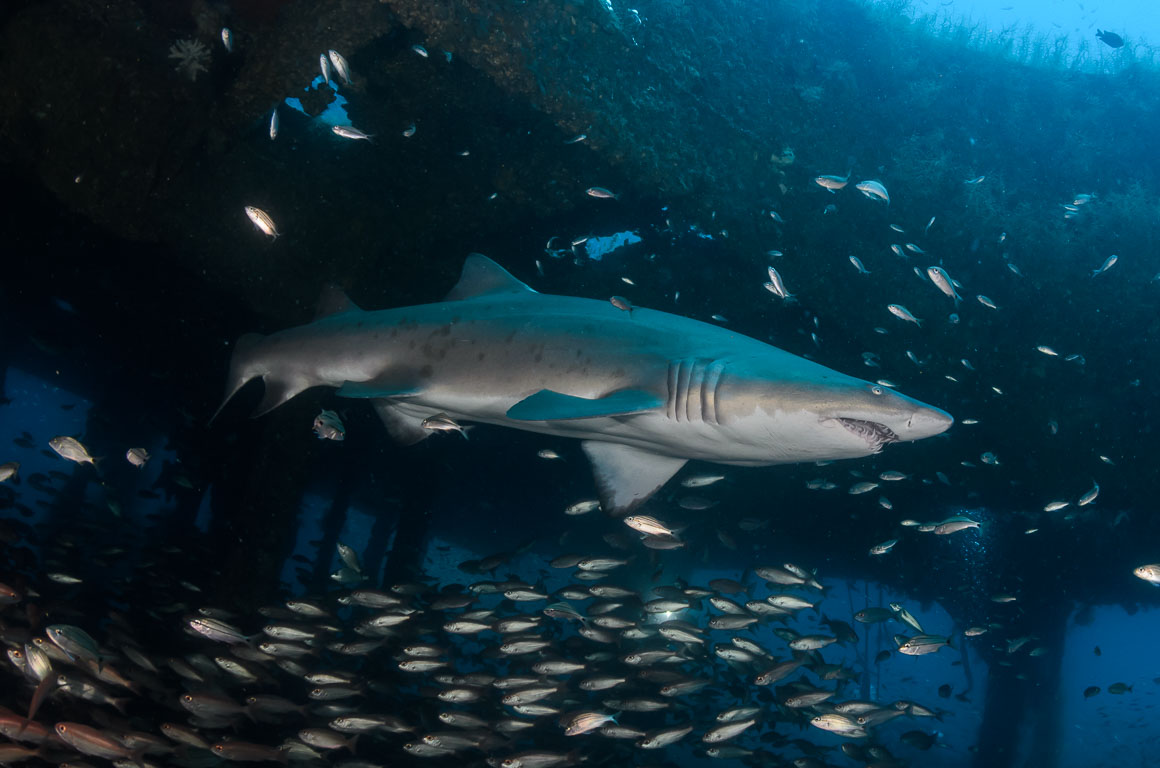
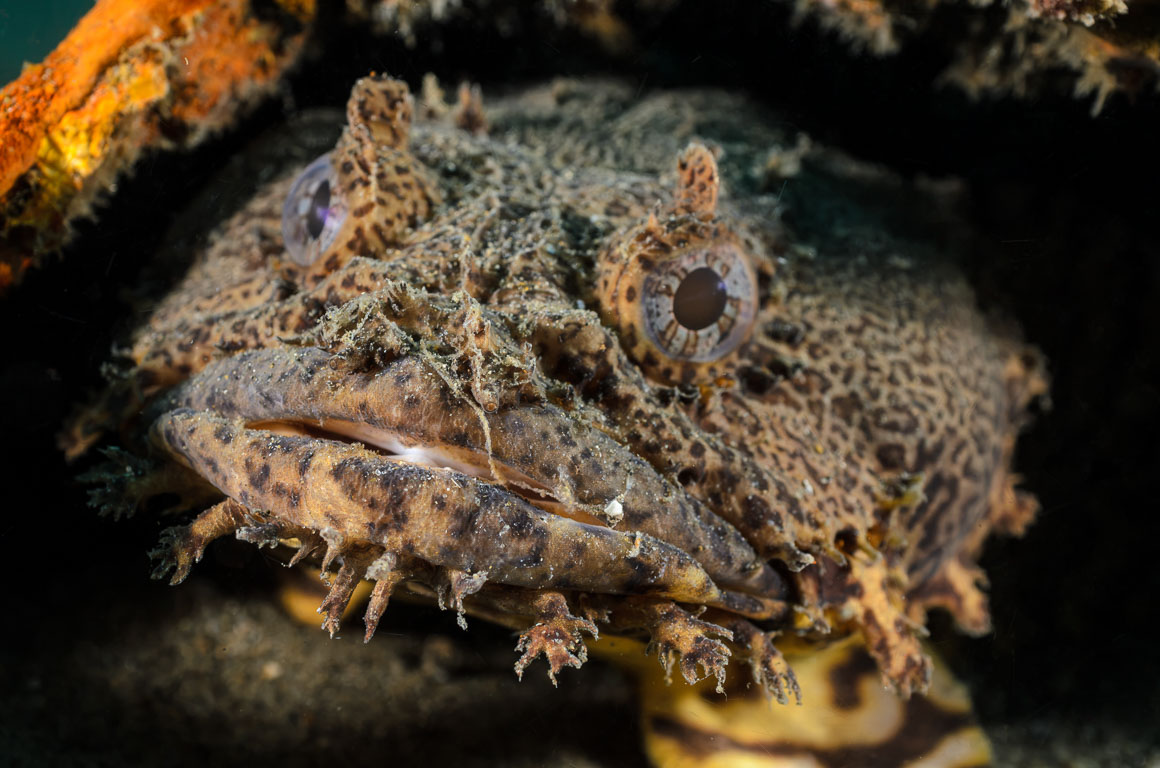
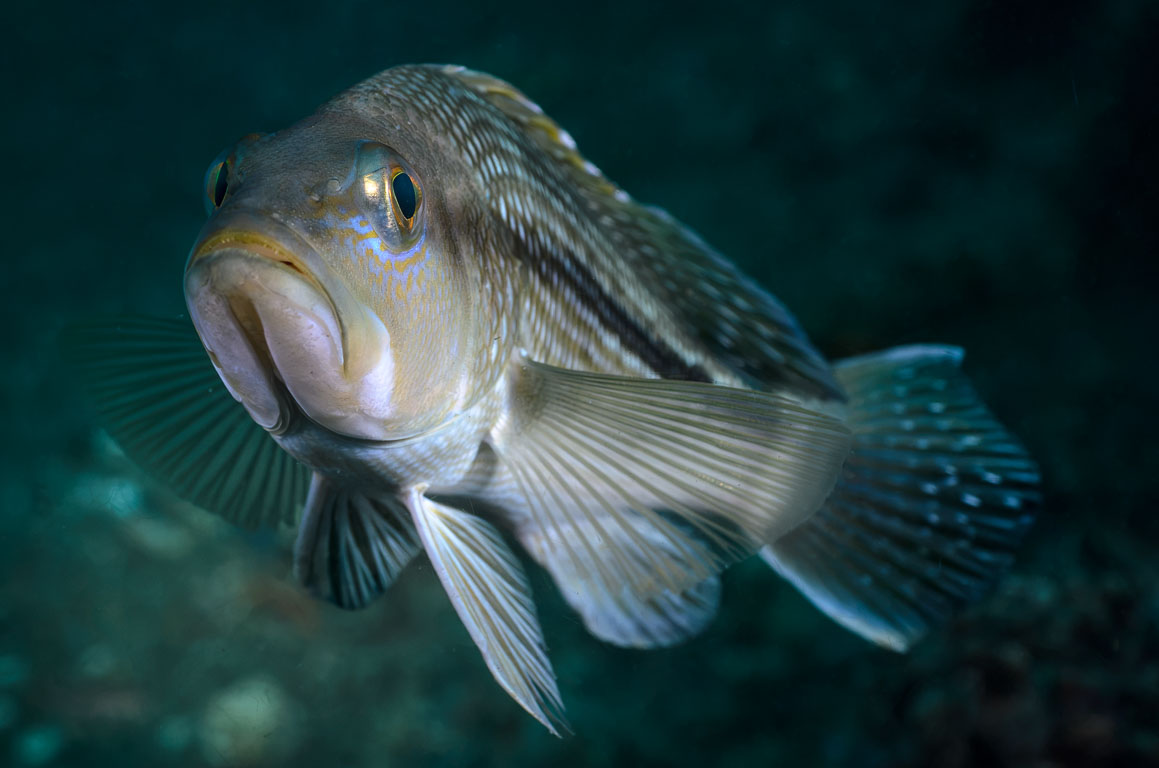
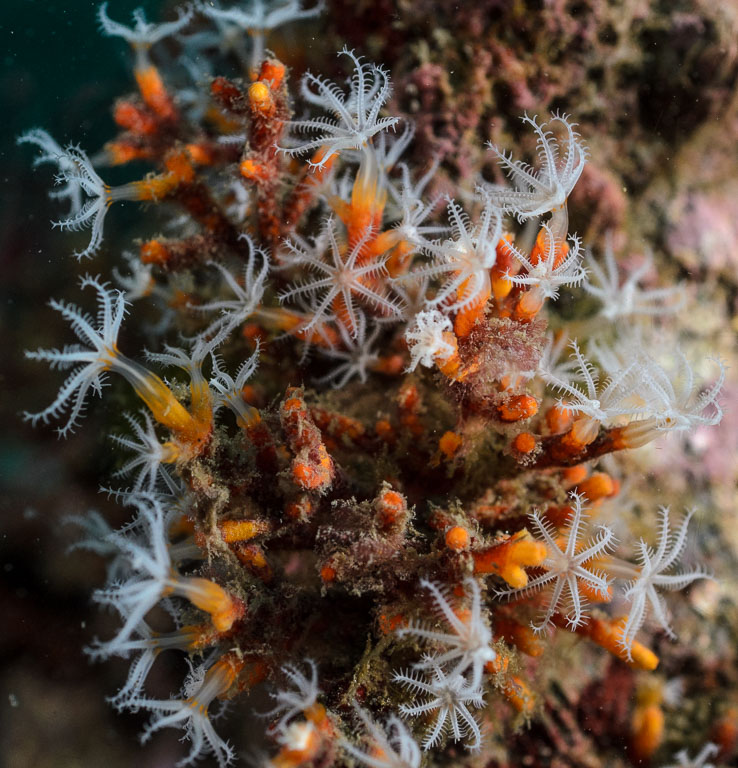
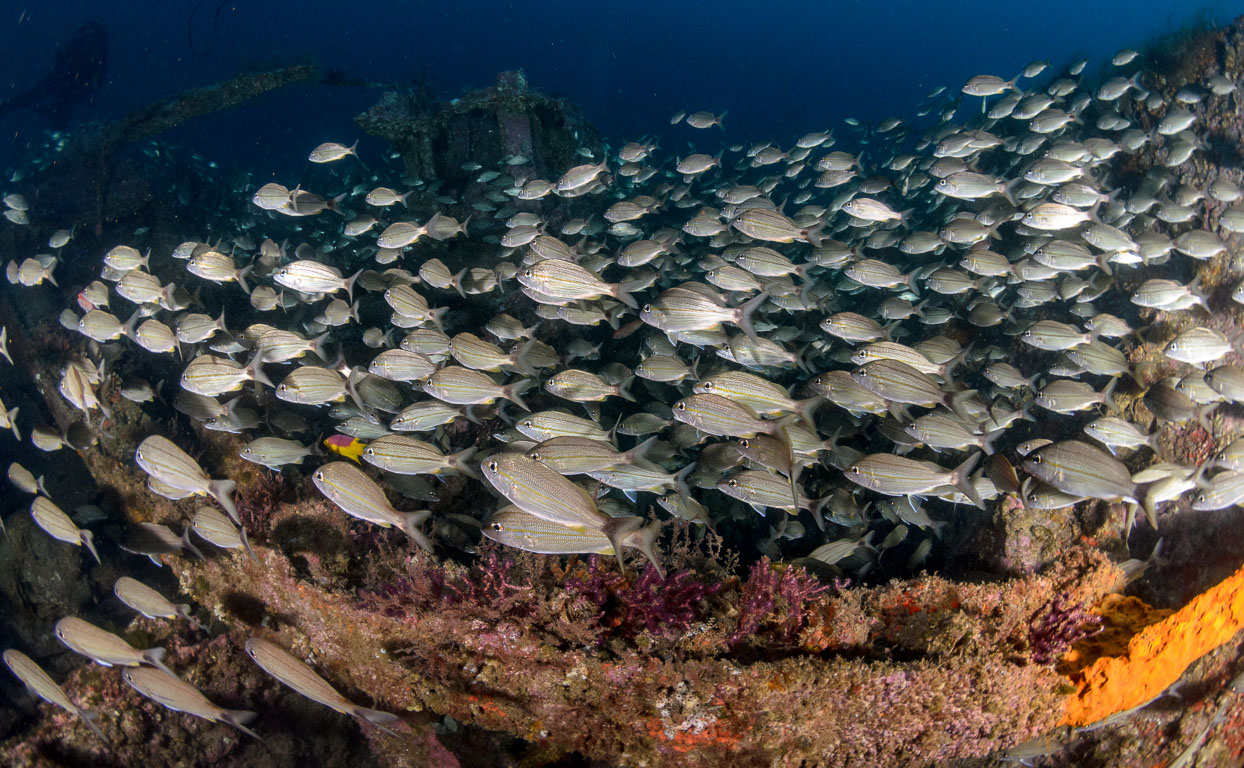
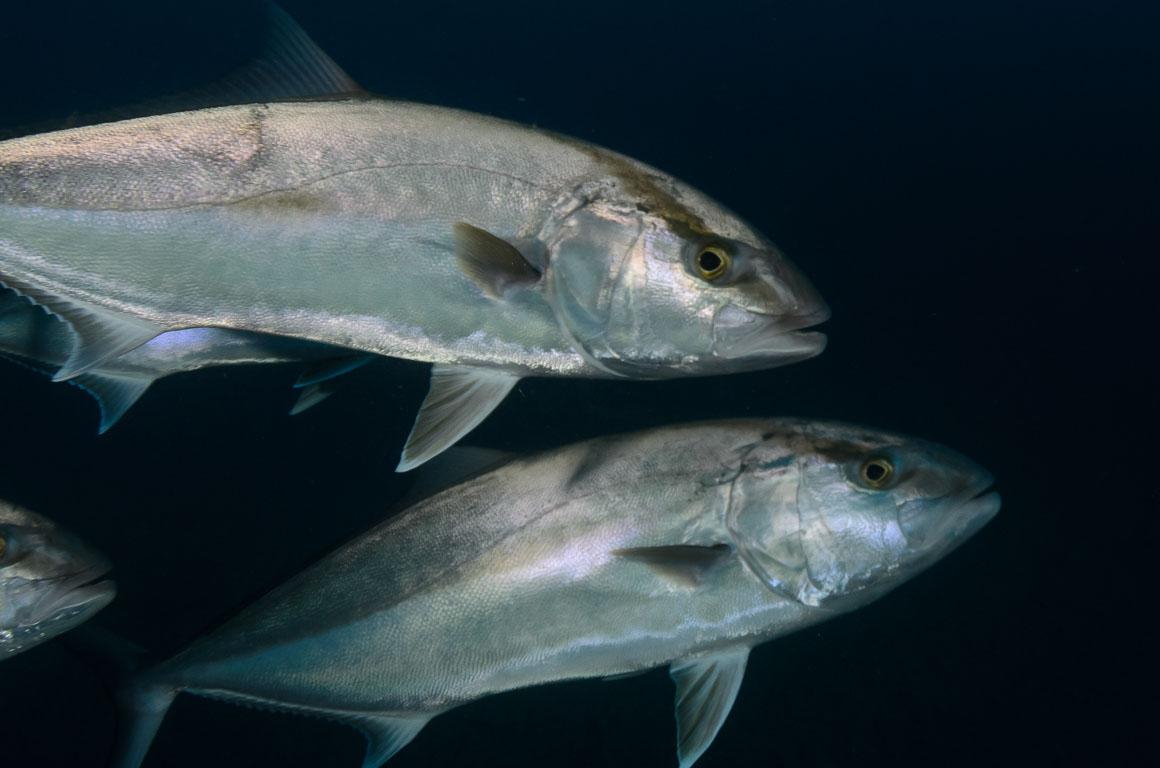
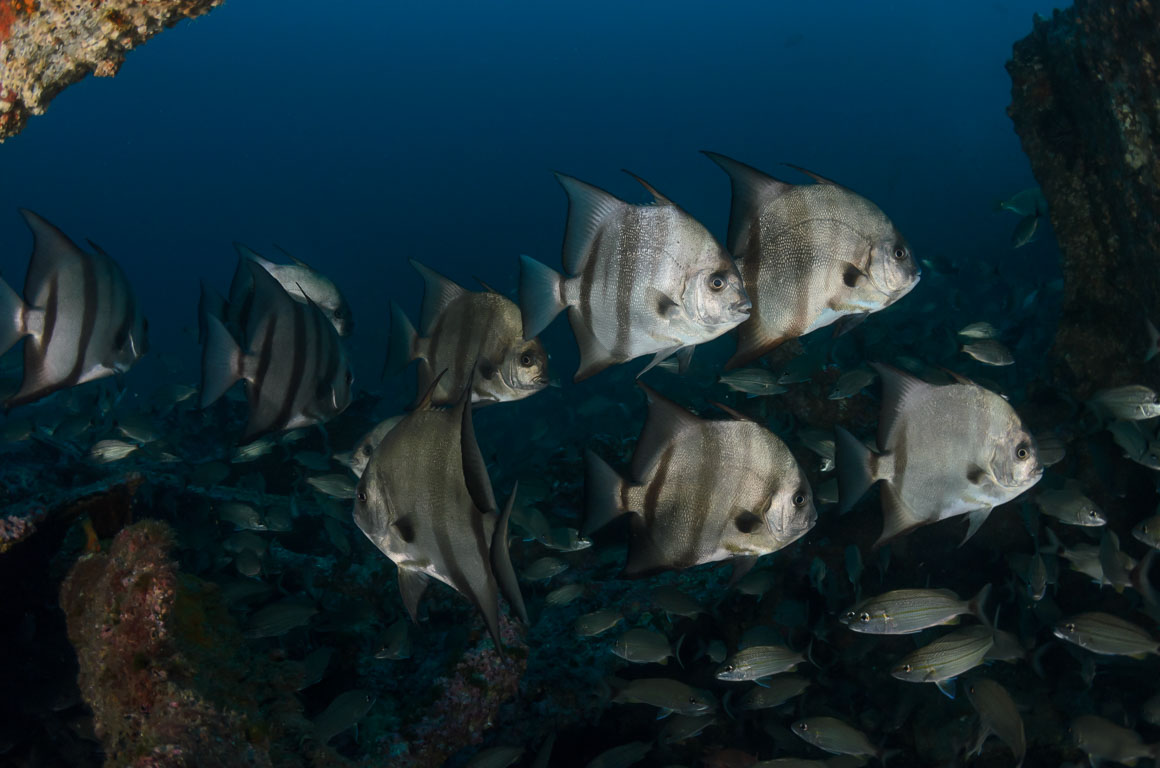
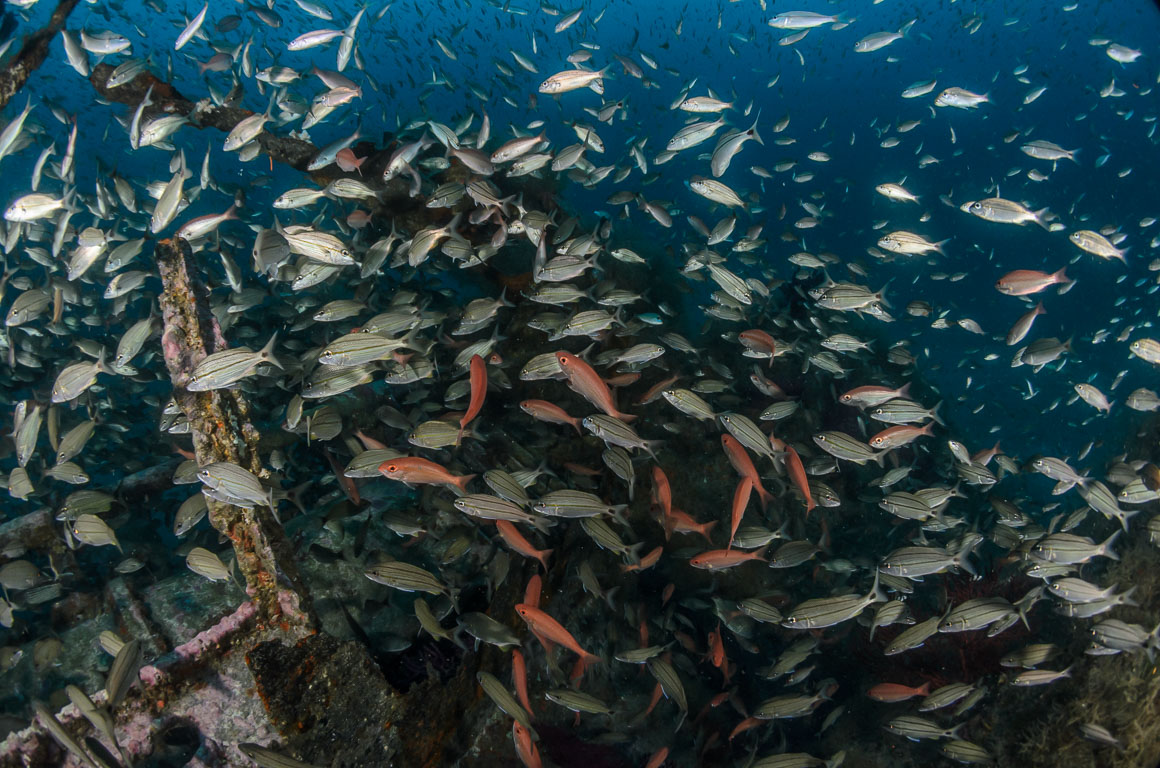
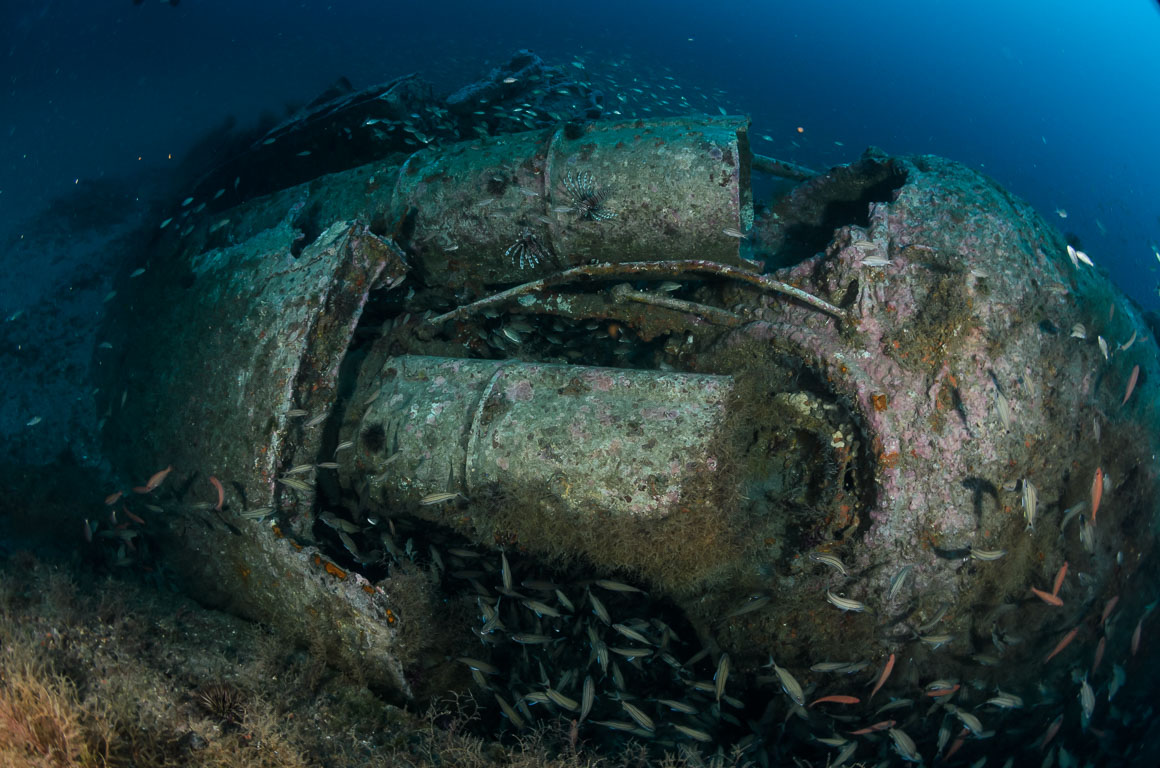
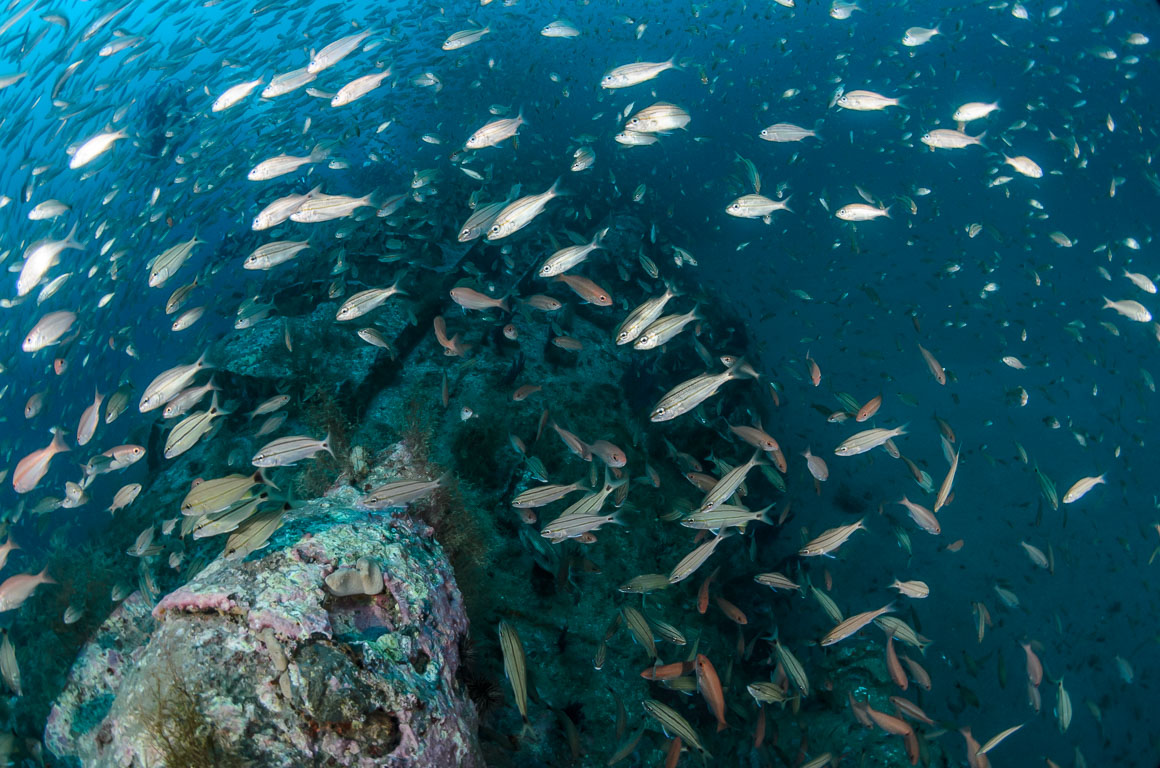
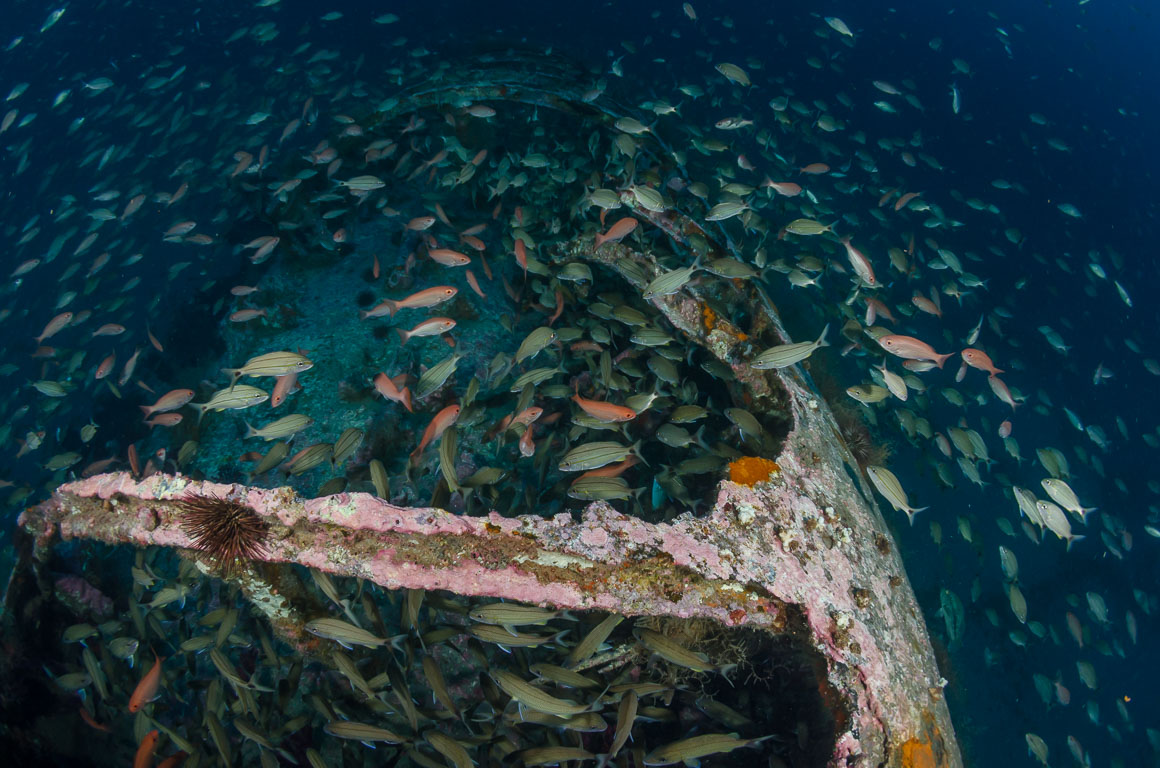
The wrecks have become thriving artificial reefs. Schools of baitfish often surround them in such enormous numbers that they can temporarily obscure the wreck itself. Barracudas and greater amberjacks patrol the schools, while loggerhead sea turtles, moray eels, and oyster toadfish are common residents.
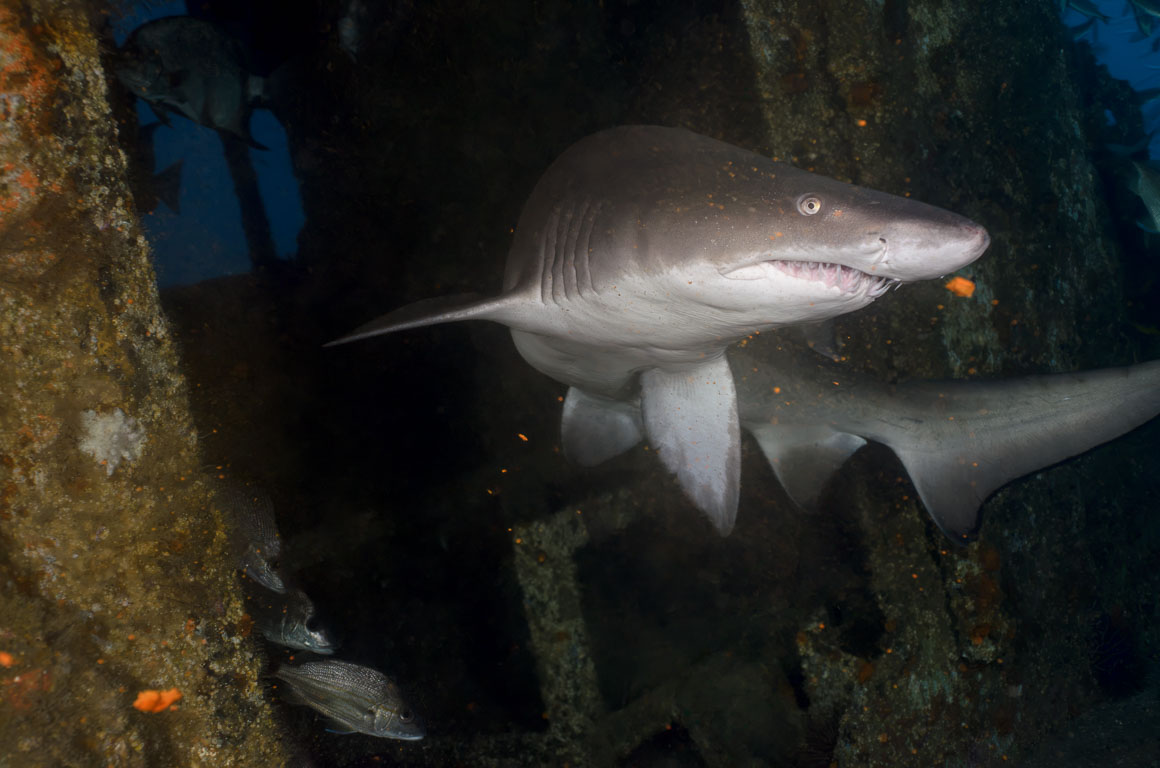
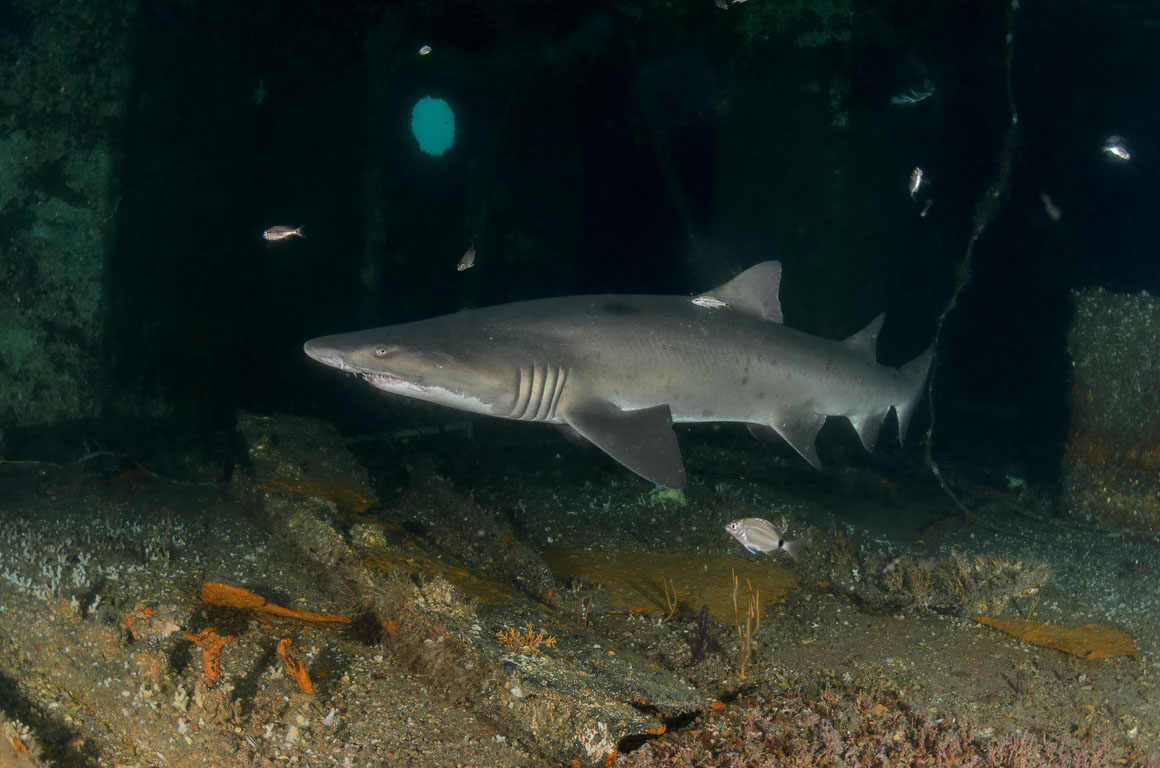
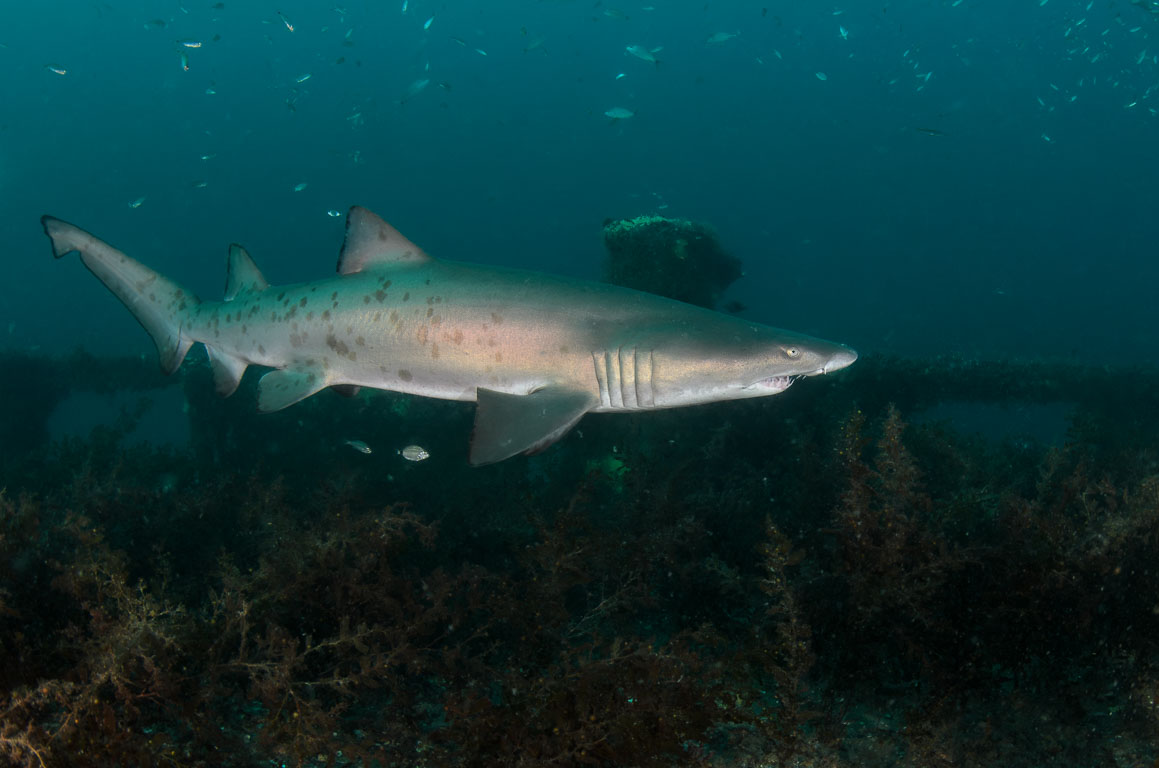
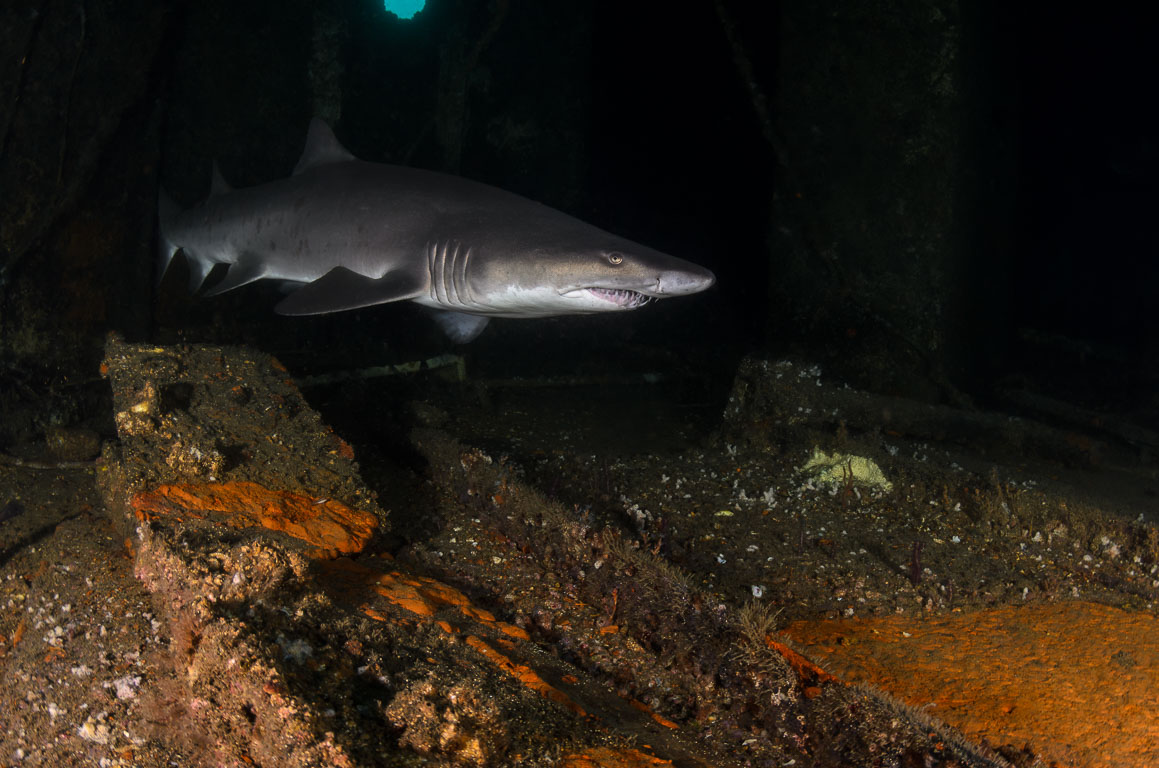
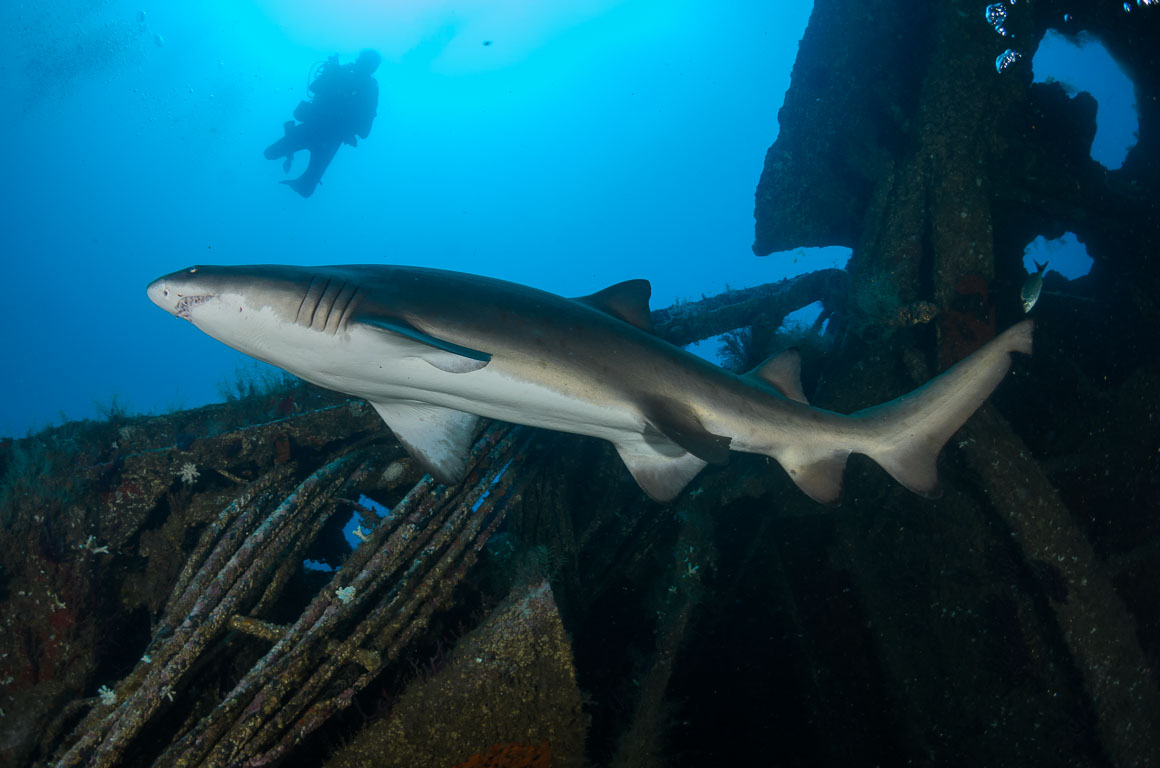
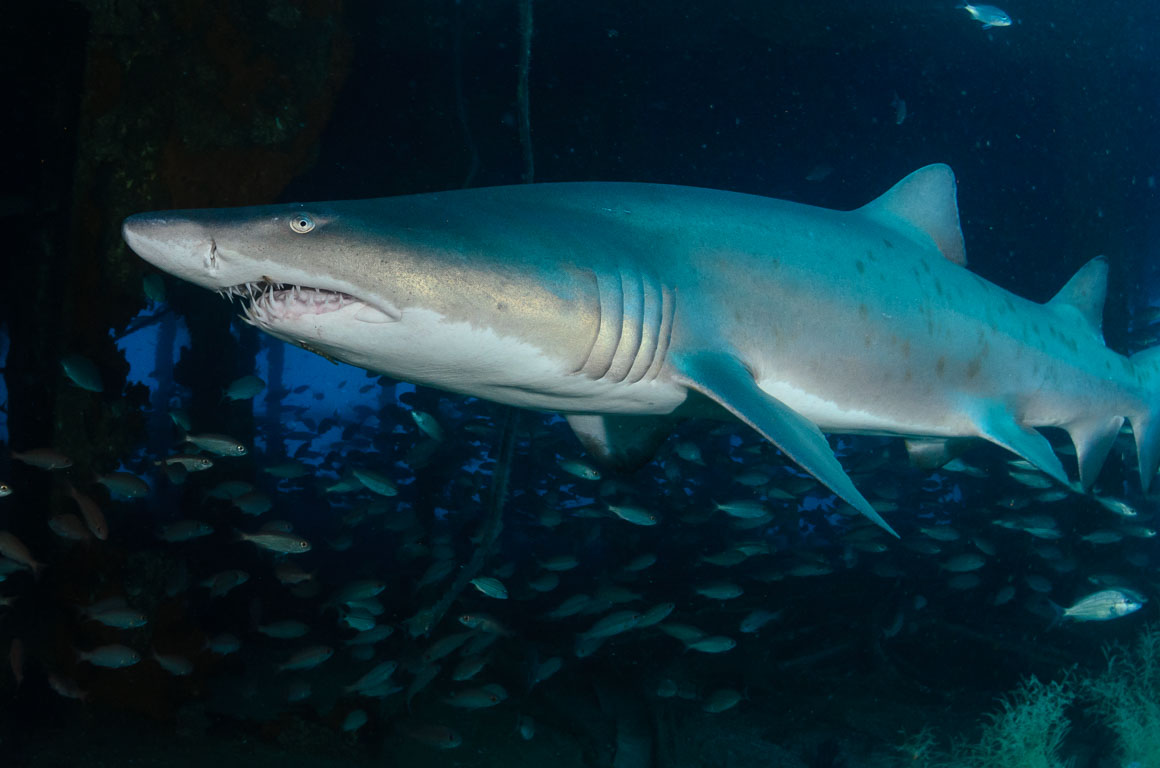
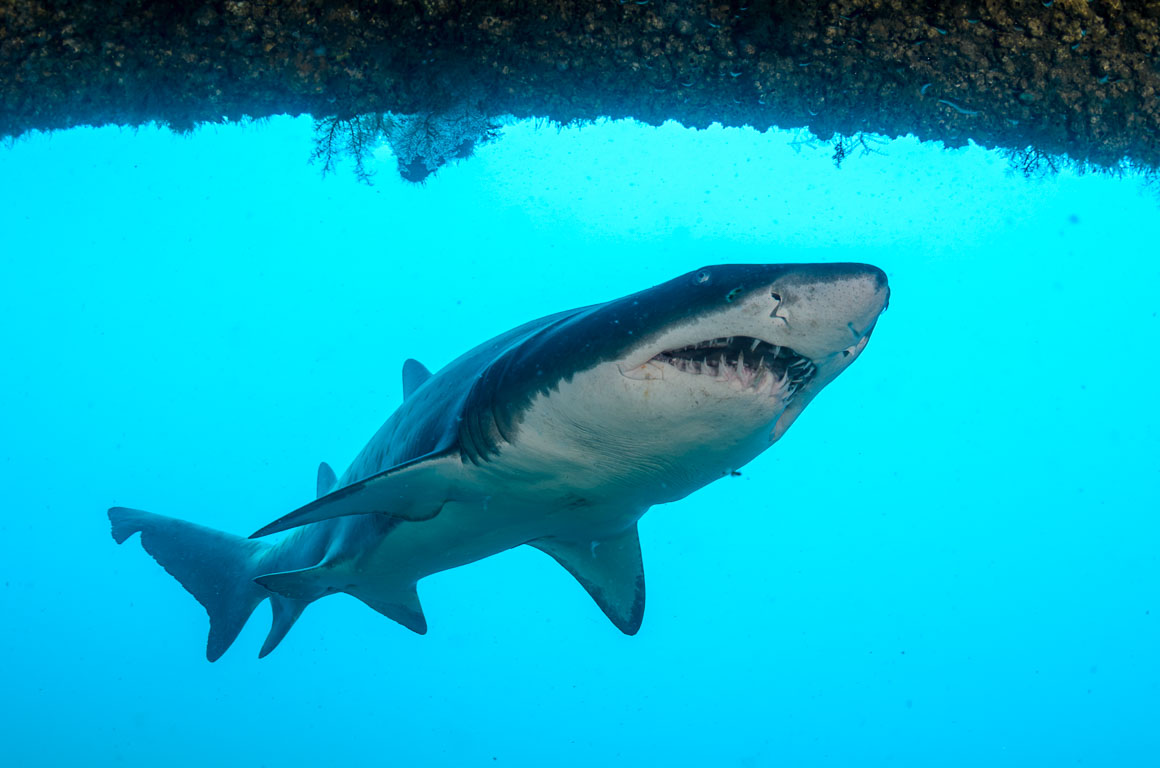
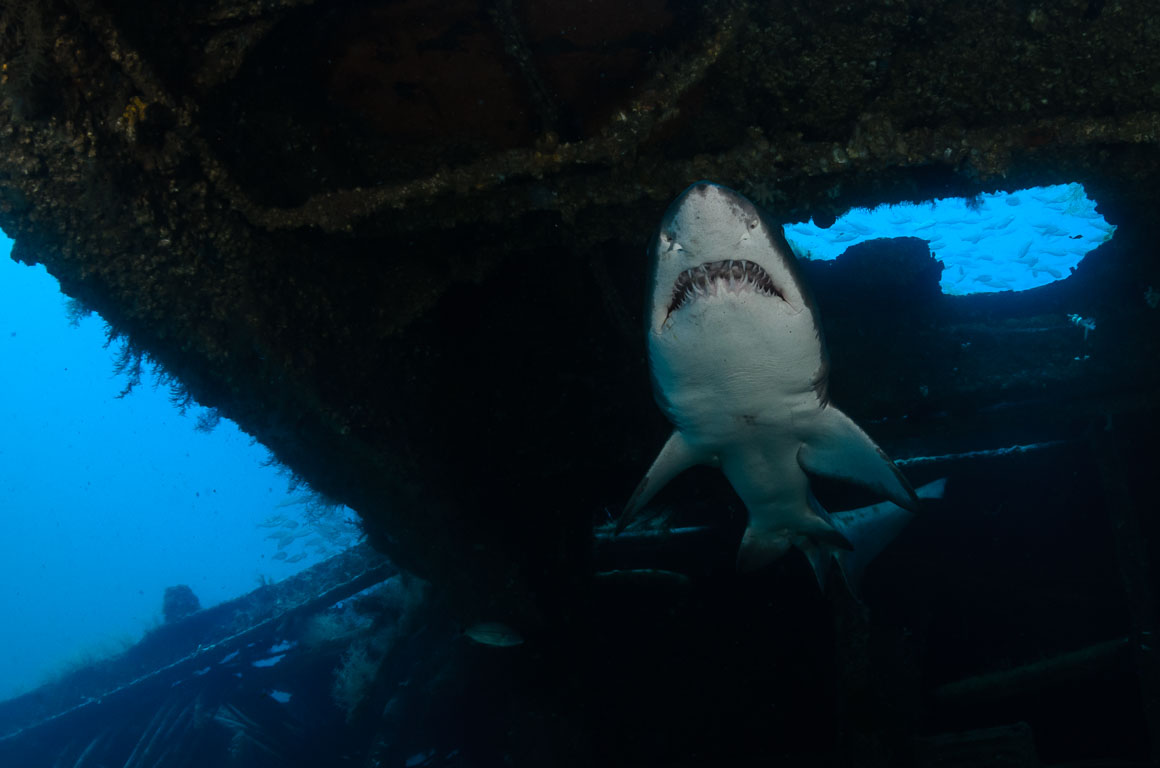
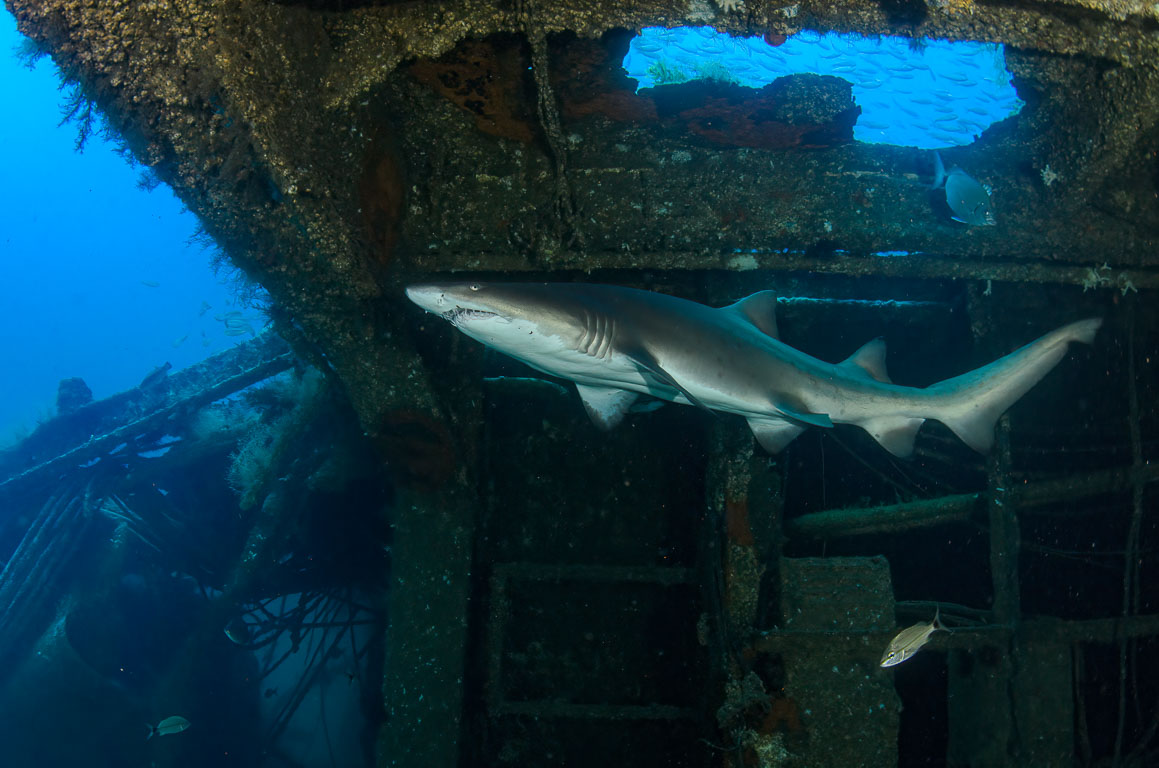
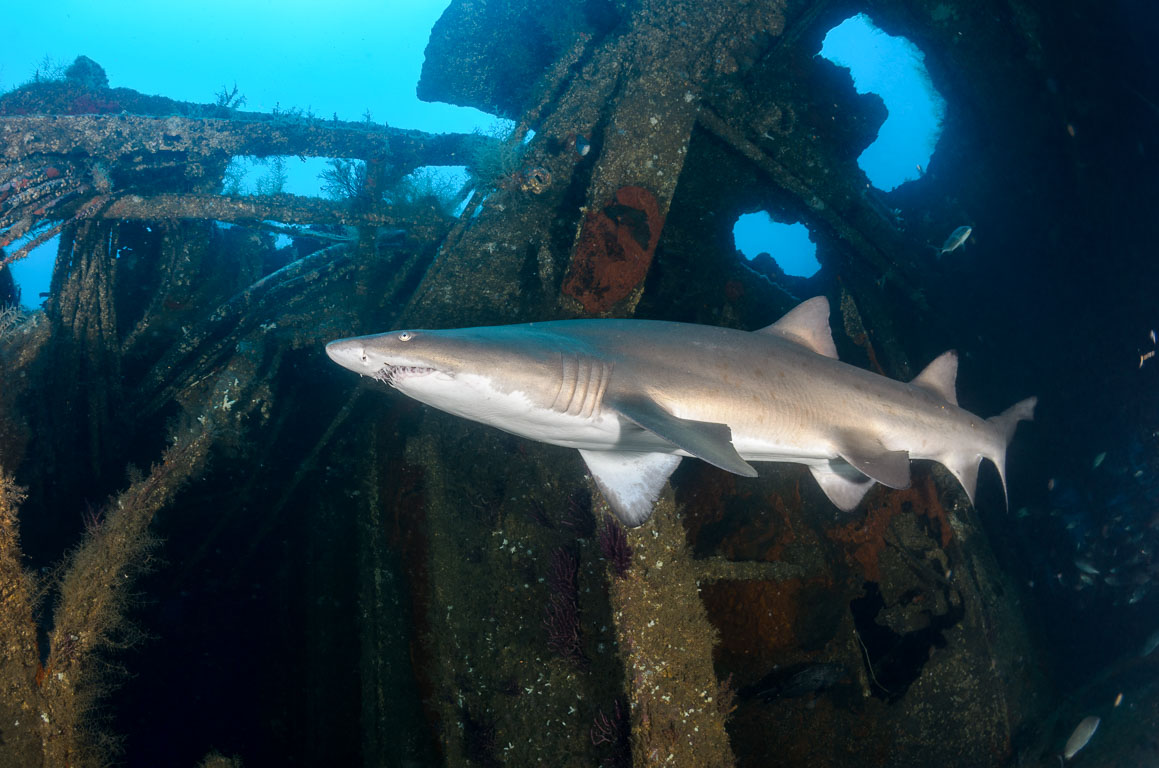
The true highlight, however, is the sand tiger shark (Carcharias taurus). These impressive sharks gather around many of the offshore wrecks, often swimming calmly among the divers or resting inside the holds. Despite their formidable appearance, sand tiger sharks are generally peaceful animals, making the Outer Banks one of the best places in the world to observe and photograph them in their natural habitat.